I want to be honest with you for a second.
I’ve been in this industry for five years and I remember my first week on the job. I was young and book smart and 100 percent sure that drill rod failure was just “bad luck” or “cheap steel.” Then my boss, a grizzled old driller who had forgotten more about mud than I would ever know, looked up at me over his coffee cup and said: “Son, you don’t kill rod. You just forget to do the service.”
Ouch. ( But he was correct.
That moment changed the way I see every pipe that comes off our factory floor. Here’s the dirty secret no one tells you when you’re just starting out: your drill rod is not some invincible beast. It’s more like a thoroughbred horse. High maintenance, finicky, and fully capable of throwing a tantrum if you neglect it.
And, as you’re reading this, I’m guessing that you’ve either:
Just replaced a set too early, felt that pain in your P&L, or
Saw a crew wrestling with a pin connection that had twisted and thought, “There’s got to be a better way.”
There is one. And it’s not brain science. It’s the boring unsexy stuff that most people skip because they’re in a hurry. Does that sound familiar? Yeah, been there too. So pour your coffee (or whatever you drink when the rig’s down) and let’s talk like we’re standing in the muddy yard after a long shift.
My Big “Oh, That’s Why” Moment
3 years ago I had a customer, let’s call him Mike, that was burning through rods like they were disposable straws. He would order another batch every two months. It was the steel, he said. He put it down to heat treatment He even blamed the weather
I drove out to his place, donned my muddy boots, and watched his crew for an afternoon. Want to have a go at what I saw?
They were just putting the rods on the gravel. No rugs. No pipe rack. Sharp rocks and bare metal. Then they’d bang ’em together with a pipe wrench that looked like it had been used to fend off a bear. And cleaning? Ha. They cleaned the threads with a greasy rag that had more sand on it than a beach towel.
That night I grabbed Mike and said, “Dude, you’re not buying rods. You’re buying a donation to the scrapyard.”
He did not laugh. But he did hear. The next morning we did nothing but show his crew three stupid-simple habits. His rod life was doubled six months later. Doubled Steel quality remains the same. No magic coating. Just simple respect for the tools.
That’s when I went from being a “sales guy” to a “here’s-what-actually-works guy.” Because without maintenance the best rod in the world is just expensive junk.
Happy Threads = Clean Threads (And Happy You)
Fine. Let’s get to the real thing. I’m not going to sugarcoat this, if your threads aren’t clean, then nothing else matters.
I’m not talking “kind of clean” or “well we rinsed it off”. I mean wire-brush-clean, visually-inspect-every-groove, run-your-finger-nail-and-feel-for-burrs clean. Why? One grain of sand in a thread connection is like a pebble in your shoe – annoying at first, but a few thousand foot-pounds of torque later, a stress riser. And stress risers become cracks. And cracks become a twisted off piece of rod that you’ll spend the next 3 hours fishing out.
“I have a little ritual I go through with every crew I train. I call it ‘The Five-Second Finger Test.’” Then you brush the pin and box and run your thumb along the flank of the thread. If you feel anything other than smooth metal, stop. Wash it again. Use a pick if you must. Five seconds of effort saves you five hours of downtime. I swear by my favourite hard hat.
And please, for the love of all that is holy, don’t use a regular shop rag. Those things catch grit and grind it right into the threads. Use a stiff nylon brush or a special thread cleaning tool. They cost what? Twenty bucks? That’s nothing compared to a rod for $2,000.
Lube: Not Just for Friday Night anymore
And here is where I get a little preachy, but only because I have seen the carnage.
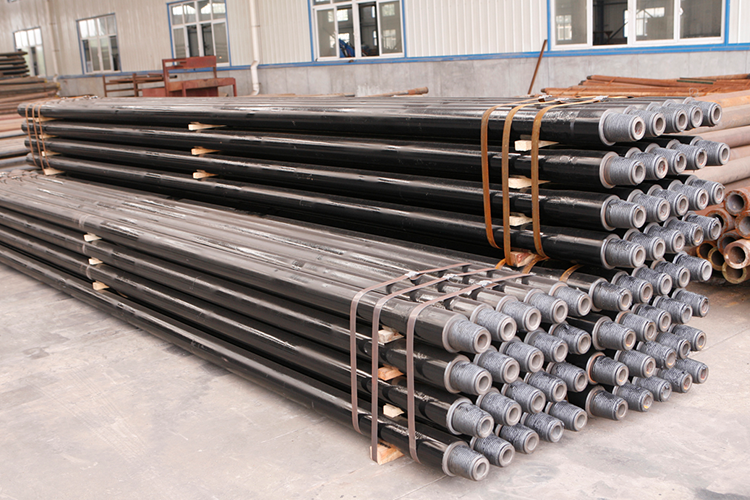
Thread compound (or dope, as we call it) is a must. There is no choice. Your eyesight contacts’ blood pressure pill. Without it you get galling. And that ugly smeared welded looking mess that makes your pin and box fuse together like they’re in a toxic relationship is galling.
But here’s the kicker: too much lube is almost as bad as no lube. I’ve been on rigs where the crew has applied so much compound it has oozed out like toothpaste. All of that extra goo traps debris and builds up hydraulic pressure inside the connection. Which can actually split the box if you aren’t careful.
My thumb rule? A thin, even coat on the pin threads—just enough to see a uniform sheen. That’s it. And use a good quality zinc or copper based compound that suits your operating conditions. If you live in a hot climate, do not use the same things that you would use in freezing weather. Yes, it does. No, I’m not making this up.
One old-timer told me, “Lube’s cheap, son, But rods aren’t. I still tell that to customers when they look at me like I’m trying to upsell them on magic grease.
Torque: The Goldilocks Zone
This one cuts my soul because I see it all the time.
Crews either: 1.
Under-torque that allows the connection to work itself out and beat itself to death, or
Over-torquing, stretching the threads and turning your box into a bulging mess.
And neither is fun. Neither are cheap.
You know that little chart on the side of the rod box? The one with torque numbers? Yeah, that’s not fancy. Read it. Go with it. And for God’s sake, calibrate your wrench. I don’t know how many “calibrated” wrenches have passed through my shop. I tried those and they were 20% off. Twenty per cent! That’s the difference between a tight connection and a stripped one.
My personal hack? After make-up I paint a small line across the connection on my rods. If that line moves in the pull, I know something’s moving that shouldn’t. It’s low-tech, but it has saved my bacon more times than I can count.
Storage: Don’t just throw them away
This is the one where I sound like the overprotective parent, but hear me out.
I understand. You are tired. Shift went long. There is mud everywhere. You just want to get the rods in the rack and go home. I’ve done that one. But that’s the thing with rods, how you store them is how they’ll work next time.
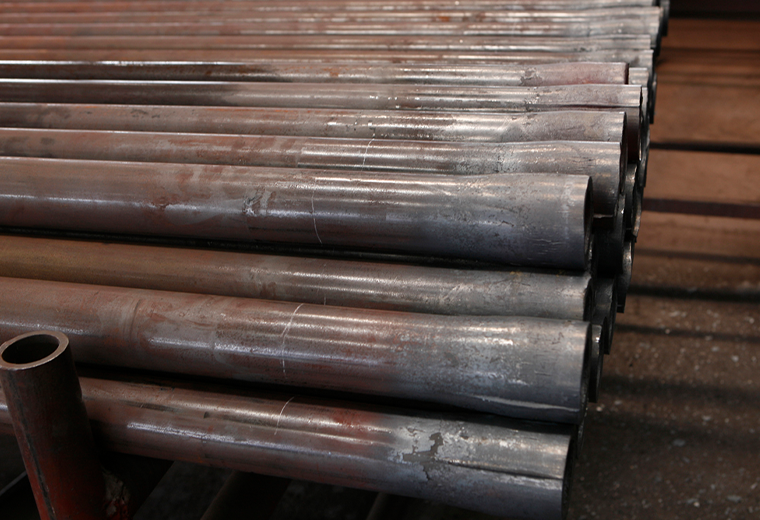
Drop them on the ground? You are inviting in moisture, grit and if you are unlucky rust. And rust is not only ugly, it’s a stress concentrator. A tiny pit on the outside of the tube may seem cosmetic, but it can grow into a crack under cyclic bending.
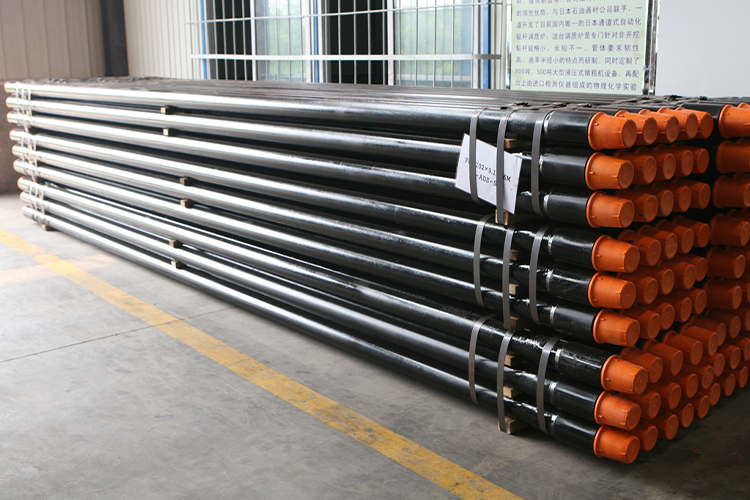
If possible, store on racks which have support in several places. Keep them off the ground. And if they are going to sit for a while, put a light coat of oil on the bare metal areas, and . . . It just takes 10 minutes. It buys you a few months to live.
I remember one customer who kept his rods outside, upright, leaning against a fence. In the rain. For one winter. By Spring they seemed to have been rescued from a shipwreck. He asked me if they were still good. I said, “Okay, if you’re doing a sculpture.” Nor did he smile.
Inspect As If Your Job Depends On It (Because It Does)
Here’s where I keep it real with you.
Every time you cut a connection, look at it. Have a good look at it. Not a chance. Not “yeah, looks fine.” Get your eyeballs in six inches and look for:
Burrs or nicks on the crests of the thread
Galling or smeering
Pin nose or box shoulder cracks
Any change of colour that might suggest over-heating
I have a small 10x magnifying loupe that I carry in my vest. Yeah, I’m teasin’. But I’ve also seen hairline cracks that would have been catastrophic failures three pulls later. The guys who laugh at me? They are the same ones who want to borrow my loupe when they smell trouble.
If you see something strange, don’t turn a blind eye. Put that rod down. Mark it. Get it checked out right — magnaflux, dye penetrant, whatever your shop uses. Besides, it costs a lot less to pull a bad rod out of the hole than a broken one.
The “Oh Crap” Box: What to Do When You Screw Up
Because let’s be real – you’re going to screw up. We all do.
Maybe one in the dark got over-tightened. Perhaps you dropped a pin in the mud and sent it off anyway. Maybe your rookie helper grabbed the wrong brush. It happens.
If it does, don’t panic. Don’t be coy. And please don’t just ‘send it’ and hope for the best.
Pull that rod, clean it, inspect it and if there is ANY doubt at all, put it into the “shop rod” pile. Use for short pulls or keep as a spare for emergencies. But don’t put it in the main string. I’ve seen one bad apple spoil a whole lot because the strain was spread around and the next weakest link broke.
Think of your rod string as a chain. Its strength is only as strong as its weakest link. And you don’t want to find out what that is at 300 feet with a reamer stuck behind it.
My Final Piece of Unsolicited Advice
Look, I sell rods for a living. You buy more, I keep my job. But I’d rather sell you fewer rods over a longer period than see you burn them through like firewood. Because happy customers return. And they bring their friends.
So here’s my challenge to you: choose one thing from this list and try it tomorrow. Maybe it’s the five-second finger-test. Perhaps it’s tagging your connections. Maybe it is just putting your rods on a couple of 2×4’s instead of the dirt.
Just do the one thing. Check if that is not important.
And if you ever want to argue about torque values or thread compounds or how to clean a box in a hurry, you know where to find me. I will be the guy in the muddy boots, loupe in hand, likely mumbling about the time I learned the hard way.
Keep boring smart
By Frank
HDD Engineering Sales
RICHDRILL EQUIPMENT CO.,LTD
Share :
Recently Released
- How to Detect Fake HDD Drill Rods Before They Fail Downhole
- How Stabilizers and Reamers Add Stress to Your HDD Drill Rods (And What You Can Do)
- When to Scrap Your HDD Drill Rods: OD Wear, Wall Thinning and Ovality Limits
- The #1 Mistake New HDD Operators Make With Drill Pipe (And How To Fix It Right Now)
- HDD Projects for River Crossings: How to Select Drill Rods That Won’t Buckle