Have a seat. Or better yet, wipe the mud off that chair and pull yourself up.
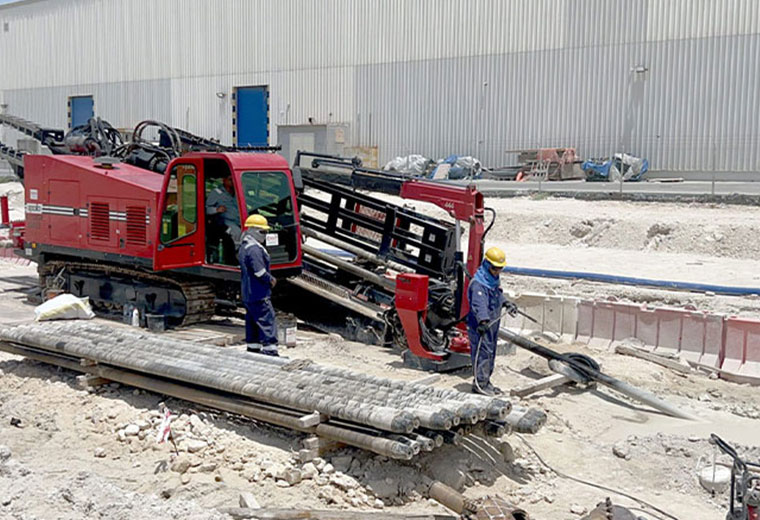
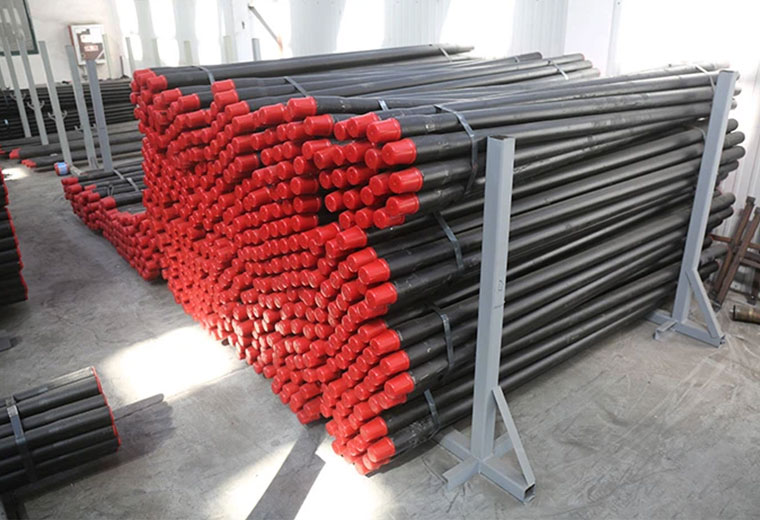
I’ve been in the HDD world for about five years now, and if there’s one thing I’ve learned, it’s that a drill rod isn’t just a piece of steel. “This is your life line. It’s the thing between you and a 500-foot hole that’s already two hours late. If that rod breaks or wears out prematurely, you lose more than a pipe, you lose a day or two, and a lot of patience.
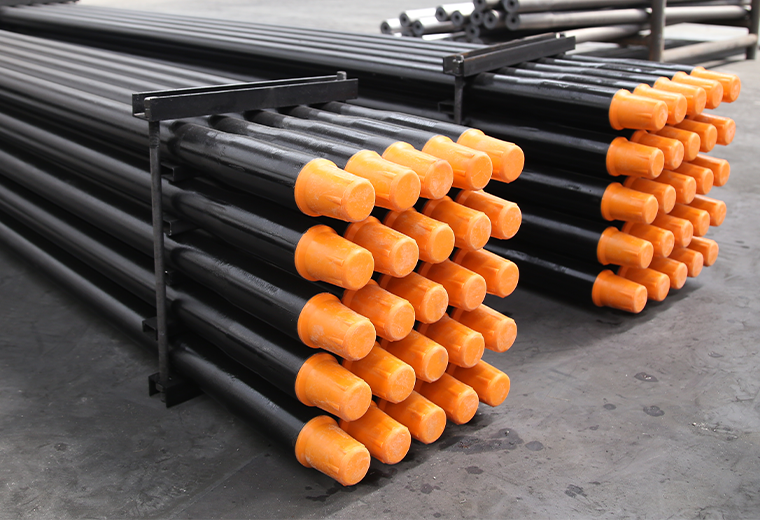
Let’s face it, new rods aren’t cheap. My shop owner always jokes that buying drill rods is like buying tyres for a truck; nobody wants to do it, but you have to at some point.
How do you push that “eventually” as far down the road as you can?
I am not going to lecture you like a book. I’ve dropped too many manuals in the mud to pretend that’s useful. I’m going to share the 10 things I actually do and tell my clients to do instead. These are the hard-fought lessons, the “oh, that’s why” moments.
So here is my blunt, honest, perhaps a little too passionate guide to keeping your HDD rods alive.
The Grease is not an option
All right, let’s get this one over with, because it bugs me.
You know that little zerk fitting on the box end? This one. There’s a reason it’s there. I was on a job one time in Texas, middle of July and this guy is just banging rods together dry. I could hear the metal squeal fifty yards away. He said he didn’t have time to oil because the foreman was breathing down his neck.
Who do you think had to pull a rod stuck two hours later? Spoiler: It was that dude.
Grease has other uses besides making things slippery. It is the space between the threads.” Without it you get galling, and galling is the death of a good connection. Squirt it out well every time. Get into the habit. Forget that. An obsession. It’s five seconds. You bitch about the weather for 5 seconds, so use that time to grease the rod.
Clean Your Boxes (Like, Seriously, Clean)
Look, I understand. You’re covered in bentonite, the sun is melting your sunglasses and all you want to do is get the next joint in the ground. I understand.
But every time you skip cleaning the threads, you are essentially grinding a fine sandpaper into your connections.
One of my best “duh” moments was when a super old timer showed me his rods. They looked 5 years younger then mine. ‘Kid, every time I back off I get a wire brush and a rag,’ he said. It only takes sixty seconds.”
Do not hammer off the mud. You’ll hit the shoulders. Use a good brush. Get the grit out of that. Your threads will thank you for not breaking in the middle of a bore under a highway. And believe me, the last place you want to learn you’ve been lazy is under a highway.
Torque, Baby – Don’t Overdo It
There’s this macho thing that goes on on job sites. The larger the wrench the stronger the man right? Nope.
I recall my first year selling rods to a crew in Oklahoma. They were using a 24 inch pipe wrench to “tighten” things up. They broke three pins in a week. [197] They blamed my product. I went out there, gave them a torque wrench and showed them the spec sheet.’If you over-torque it,’ I said, ‘you’re stretching the metal. It tyres me. It gets miserable.
They looked at me like I was talking in French. But you know what? They gave it a try. The breaking stopped. Be gentle with your rods like a gentle giant. Heavy but needs a steady, consistent hand, not a grizzly bear hug.
Apron (or Absence Thereof) is a Crime
I have a personal beef with operators who don’t use the rod apron or stand.
If you are laying down pipe and it is sitting on rocks, gravel or just plain dirt, that’s not a ‘storage solution. It is a ‘dent making system’.
I had a customer once that stored his spare rods horizontally on a pile of crushed concrete. He wondered why his rods were bending and cracking out into micro-cracks. Micro cracks become macro cracks. Macro-cracks are you calling me at 9pm on a friday.
Keep the rods off the ground. Use a rack, use wood blocks, use anything. They’re not without fault. They’re high-strength steel, but they’re only as tough as the environment you put them in.”
Examine the Threads With Your Fingers (and Eyes)
You don’t need a fancy laser tool to check a thread. Well, you do for the serious stuff but for the daily checks?
I run my finger along the thread and look at the shoulder.
Your fingers are so delicate. They can feel a burr, a rough spot, long before your eyes can see it. I recall a job in Colorado where the crew kept having joint failures. I ran my finger over the male thread and right away I felt a little divot. So I went over, It looked OK but it felt all wrong.
We cleaned it up with a small file and the rod lasted another three jobs.
If you see a shiny flat area? That’s a red flag. ” If you see rust ? That’s a red flag right there. And rust. And rust. And rust. That’ll come.
Don’t leave them out in the mud all night
Okay, let’s discuss rust.
I know you are tired. I know you did the job, or you are just breaking for the night. But to leave that last rod or a rack of rods in a pool of water or wet clay is like leaving your favourite leather boots out in a monsoon.
I had one guy lose a whole string by leaving it in a trench over a weekend. Monday morning arrived. The corrosion had bitten into the surface. We had to throw away three rods.
If you can’t pull them and wipe them off at least get them out of the standing water. A little preventive maintenance now will save you a lot of heartache (and money) down the road.
Hammer Is Not Your Buddy
I have a rule. If you’ve got to hit your rod with a hammer to break the joint, you’re already losing.
That is why I say go back to the cleaning and greasing points. Clean it, and grease it, and the break-outs are slick. If you pound the box with a sledgehammer you are damaging the material and, more importantly, disturbing the alignment of the threads.
I’ve seen a new guy so pissed about a stuck rod that he took a five-pound hammer to it. He didn’t free it, but he broke the box shoulder. That job went from a two-day bore to a five-day hell.
Use a good break-out wrench. If it is that snug then something is wrong in the connection, not with the connection.
twist your rods in the string
This is a pro-tip I learned from an old drilling superintendent in Georgia .
Don’t always use the same rod as your first one in the ground. That rod takes the most wear, the most bending, the most abuse.
If you number your rods and rotate them consistently (like, use rod #5 as the starter on one job, and rod #12 on the next), you’re spreading the love. You’re ensuring that one rod isn’t getting “beaten up” twice as hard as his buddies.
It’s like rotating your tyres. You do it so they wear even. And do the same for your drill string.
Your Reamer Is a Bully—Be Careful
Okay I may get a little dramatic here, but indulge me.
The reamer is heavy . Very heavy. And when you’re pulling back the weight is hanging on your rods. If you’re working too hard, too fast, or trying to pull through a rock formation at too high of an RPM, you’re flexing those rods way beyond their happy zone.
I had a customer that was adamant about pushing that reamer through shale like it was butter. His poles were looking like bananas. We put a new reamer in, slowed the rotation down and boom, back to straight rods.
Don’t let the bully push the rods about. Slow and steady wins the race . I know everybody’s anxious to get home to dinner but believe me you want to get home with no broken rod.
Talk to Your Crew (and Really Listen)
This is the most important one, costs zero dollars.
The guy on the drill can tell if anything feels weird. To your operator the engine sounds different under strain. You don’t see what the guy on the rack sees who guides the rod.
I remember one time I was on a site and the operator said, “Man, I don’t know, it feels like I’m fighting it today.
The foreman told him to keep going and shut up.
They broke through a seam of granite they didn’t know was there, and snapped the rod at 150 feet.
If I could give you one thing, it’s just to create an environment where your guys can say “Hey, something’s off” and not get yelled at. You’d be surprised at how much money that saves.
So that’s my rant.
If you take one thing from this, let it be this: treat your drill rods like a good fishing rod. You don’t drag it behind the truck. You don’t knock it clean. You don’t forget the feel of the line.
These 10 tips are not some theories I read in some textbook at a trade show. They come from dirty hands, late night phone calls and a lot of “I told you sos.”
Easy on your steel and it will be easy on your wallet.
Got a war story? A tip I overlooked? Leave a comment below or email me. I really love hearing how you guys are doing out there. Stay dirty my friends, and for the love of all that is holy grease those threads.
Keep boring smart
By Frank
HDD Engineering Sales
RICHDRILL EQUIPMENT CO.,LTD
Share :
Recently Released
- How to Detect Fake HDD Drill Rods Before They Fail Downhole
- How Stabilizers and Reamers Add Stress to Your HDD Drill Rods (And What You Can Do)
- When to Scrap Your HDD Drill Rods: OD Wear, Wall Thinning and Ovality Limits
- The #1 Mistake New HDD Operators Make With Drill Pipe (And How To Fix It Right Now)
- HDD Projects for River Crossings: How to Select Drill Rods That Won’t Buckle