Let me tell you about the day I learned this lesson the hard way.
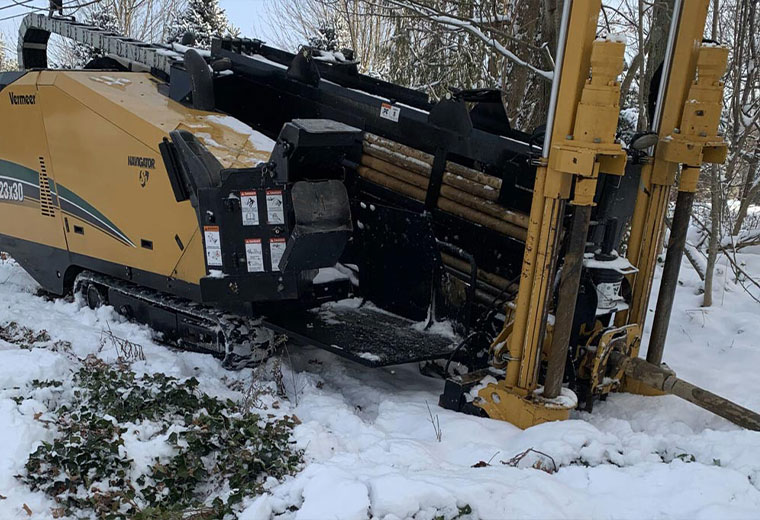
Imagine. I was only three months into this industry, young and way too sure of myself. Customer called in needing drill rods for his Vermeer rig. I nodded along, jotted down the model number and shipped him a set of rods that should have fit–in my defence. They looked fine. The size was correct. The price was right.
Well, yes.
Two days later, the phone rang. You know the song. The kind where you can hear the guy on the other end trying really hard to be polite, but the frustration is bubbling up underneath. “These rods don’t screw in bud.” It appears that I had sent him rods with the wrong thread profile. He had some firestick setup. “I sent him standard API threads. Different pitch. Different taper. Different everything. I wasted half a day, looked like an amateur and spent the next week learning every thing I could about thread compatibility.
So let me save you from committing the same dumb mistake I made. This is the real deal, which rods line up with which rigs.
The One Thing No One Told Me About Starting
The point is : the key is the thread . Not the rod diameter. Not the length. Not even the steel grade. Though those matter too. But if the thread does not match, then nothing else matters. You can have the prettiest S135 forged rod money can buy and if the pin doesn’t screw into the box on your machine, you’re dead in the water.
I remember having this “aha” moment finally on a job site maybe six months in. Watching a crew make up a string, it occurred to me these threads are not just threads. “They are like a handshake between the rod and machine.” But if they don’t fit right, you get galling, you get separation downhole, you get all sorts of expensive problems. And believe me, nobody wants to be fishing a broken string out of a bore.
Vermeer Rigs: Firestick Family
Vermeer’s take on their own little ecosystem. They came up with this thread profile called Firestick, and honestly? It’s pretty smart. They’re coarse threads, tapered. So they go fast in the field, you’re not standing there cranking for ever. And they feature a double shoulder design which is great for high torque.”
But here’s the thing – Firestick comes in different sizes. You have your #200, your #400, your #600, your #700, your #900. They all equate to different sizes of rigs. A small D7x11 has a 1.32 in. #200. A D33x44 or D36x50 uses a #602 FS2 thread, larger . D90x60? That’s a 2.875″ #900.
Had a customer once that told me he needed ‘Firestick rods’ – that was all he could tell me. It turned out he had a D24x40 and needed the #600. If I had just sent him any old Firestick rod we’d be in trouble. So, for the love of all that’s good, when you call me, tell me your exact rig model. It would save us both a headache.
Oh, and Vermeer has a Silver Series line too. Still good quality S135 steel, just a slightly different spec than the premium Firestick stuff.
Ditch Witch Rigs: The DW Name Game
Ditch Witch is a little different. Their thread designations usually are “DW” and a number (e.g., DW 1.1, DW 1.47, DW 1.94, DW 2.11 etc.).
The small rigs run the small numbers. A JT5? A JT10? This is a DW 1.1 and the threads here are straight, not tapered like they are in API pins. JT1220 or JT1220M1 DW 1.47. A JT2720? 1.94M thread. And if you are running something bigger like a JT100 you are looking at DW 3.27-4.
This is something that tripped me up early on. Ditch Witch uses both “M” and non-M designations and sometimes they are interchangeable and sometimes they are not. A standard JT2720 may use a different thread than a JT2720M1. Always double check.
The DW system is actually quite simple once you get used to it. The number typically denotes the size of the thread or the diameter of the pin. But seriously? though I do have a reference chart on my phone. Nothing wrong with that.
Case Rigs: The Wild Card
Case is the tougher one to discuss, because they don’t have a proprietary thread system like Vermeer and Ditch Witch do. Most Case rigs have standard API connections, NC23, NC26, NC50, that sort of thing.
I recall the first time someone asked me for Case rods. I thought, “Okay, simple enough. ” No. Case has used different thread specs over the years so depending on model and year you could be dealing with anything from a standard API thread to something more specialised.
The good news? Case is often using API threads, so you have more options from aftermarket vendors. The bad news is? You really have to know exactly what you’re looking for. Don’t use the phrase “rods for a Case rig.” Tell me the model. D16X20, D24X40, D50X100, whatever it is. And if you can, send me a picture of the thread on your present rod. I can’t tell you how many times a picture has saved a wrong order.
The Steel Grade Thing (Because Someone’s Gonna Ask)
Ok, quick side note because I get this question all the time. S135 is the current gold standard for drill rods for HDD. Its yield strength is 135K PSI. The vast majority of aftermarket rods, including ours, are S135. You’ll also see G105 at times, which is a step down in strength.
But the thing is, not all S135 rods from different makers are the same. The steel grade is just a beginning. It’s the forging, the heat treating, the threading – that’s where the quality really comes out. I’ve seen S135 rods break in half on a job and I’ve seen S135 rods that just go and go. The grade matters, but it’s not the whole story.
My Golden Rule On Buying Rods
After five years of doing this, my simple rule is, know your rig, know your thread and don’t guess.
If you’re not 100% sure what thread your machine takes, have a look at your existing rod. There is normally a stamp or marking somewhere. If not , take the diameter of the post and the thread pitch . Or take a picture and send it to me. If you have questions, I’d rather you bug me than deal with a return.
And one other piece of advice — buy rods that are compatible with your machine, not just “close enough.” I know aftermarket rods can save you money up front. But if the thread profile is not a perfect match, you will wear out your machine’s drive chuck faster, you will get poor torque transfer, and you will ultimately spend more in the long run.
Putting It All Together
Compatibility is not rocket science. But you don’t want to guess either. Vermeer wants Firestick, Ditch Witch wants DW, and Case is the wild card – could be API to propriety.
What is the best thing to do? Know Your Equipment Write your rig model down. Specify the type of thread. Keep that info somewhere you can get to it. And when you are ready to order, just tell me what you got. I’ll handle it from here
And if you don’t know? Ring me. Send me a picture. I’ve been on the receiving end of that ‘wrong rods’ phone call and I never want to be again. Let’s do it right the first time.
Now if you will excuse me I have a customer that just sent me a picture of a thread I have never seen before. Go do some work.
Keep boring smart
By Frank
HDD Engineering Sales
RICHDRILL EQUIPMENT CO.,LTD
Share :
Recently Released
- How to Detect Fake HDD Drill Rods Before They Fail Downhole
- How Stabilizers and Reamers Add Stress to Your HDD Drill Rods (And What You Can Do)
- When to Scrap Your HDD Drill Rods: OD Wear, Wall Thinning and Ovality Limits
- The #1 Mistake New HDD Operators Make With Drill Pipe (And How To Fix It Right Now)
- HDD Projects for River Crossings: How to Select Drill Rods That Won’t Buckle