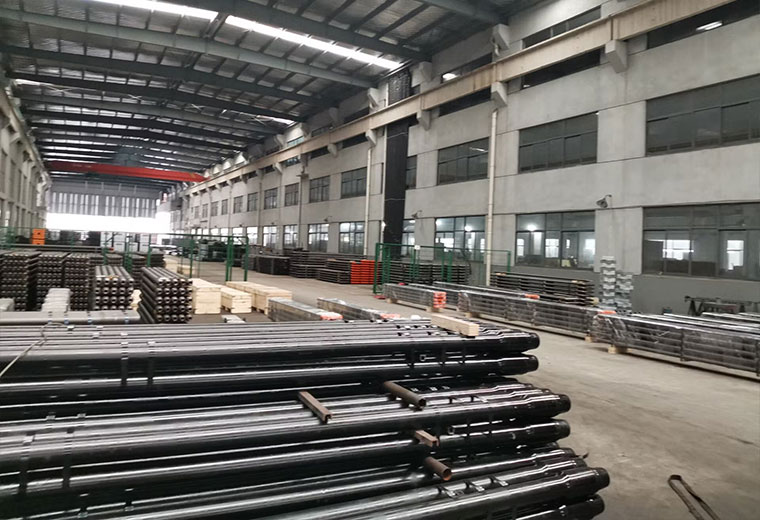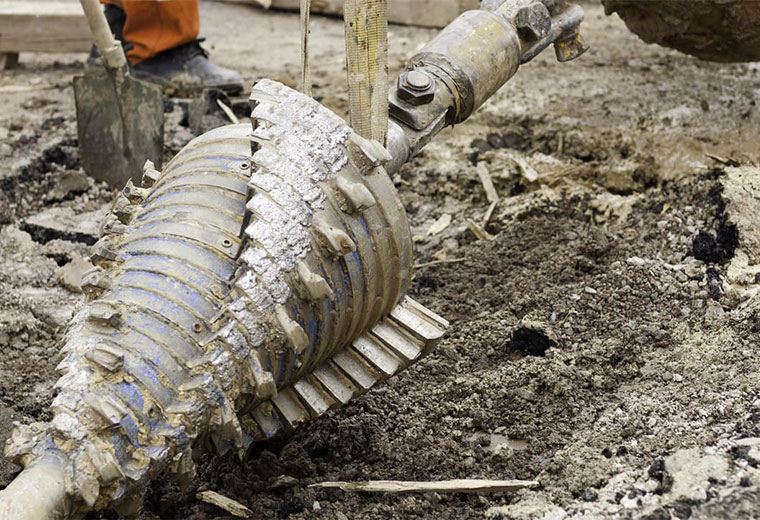
Here is something funny for you. Five years ago when I first got into this industry I thought a drill rod was a drill rod. You know. It’s like a metal rod with threads on both ends. How difficult can it be?
How stupid I was.
I remember my first month on the job. I stood in our warehouse staring at two rods that looked almost the same to my untrained eye. One was one-piece forged. One was friction welded. “What is the difference really?” I asked our shop foreman. He just laughed and said “Go break one of each and you’ll know”.
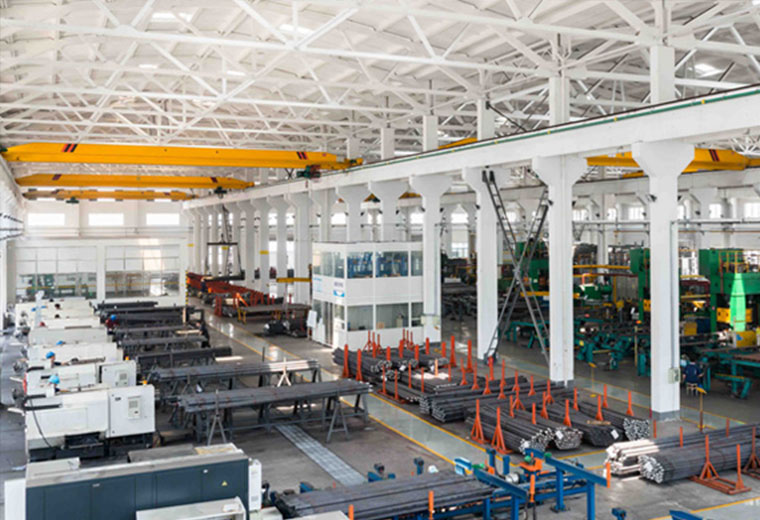
He was not wrong. But let me spare you the trouble (and expense) of learning that lesson the hard way.
The ‘Aha’ Moment That Changed Everything
About two years ago, I was on a customer site visit with a customer that had been running friction-welded rods for years. He was always complaining about the broken rods near the joints that he had to pull out of the ground. “I’m doing everything right, I’m turning them, I’m greasing them,” he said. “Why the hell am I still burning rods?
I asked him what kind of rods he was running on. He gestured at the rack. “Friction-welded,” he said. They are cheaper.”
And that was when it clicked. We took one of his failed rods off the rack and I showed him exactly where it had failed, right at the weld zone. That little thin ring where the tube body meets the tool joint. That was when the tiredness had begun.
He looked at me and said, “So I’ve been saving money on the front end and losing it on the back end?”Precisely,” I said. “Every time, every time.
That was my wake-up call.” Not from some text book or sales training. Just some guy in the dirt with a broken rod doing the math in his head .
So What’s Really Different?
So what does that mean in plain English?”
A forged one piece rod is exactly what it sounds like. They take a single piece of steel tubing, heat the ends until they are workable, and forge—or “upset”—the ends into the pin and box connections. No weld. No joints. A single piece of metal all the way across. The entire assembly is heat treated as a unit, machined, threaded and out the door.
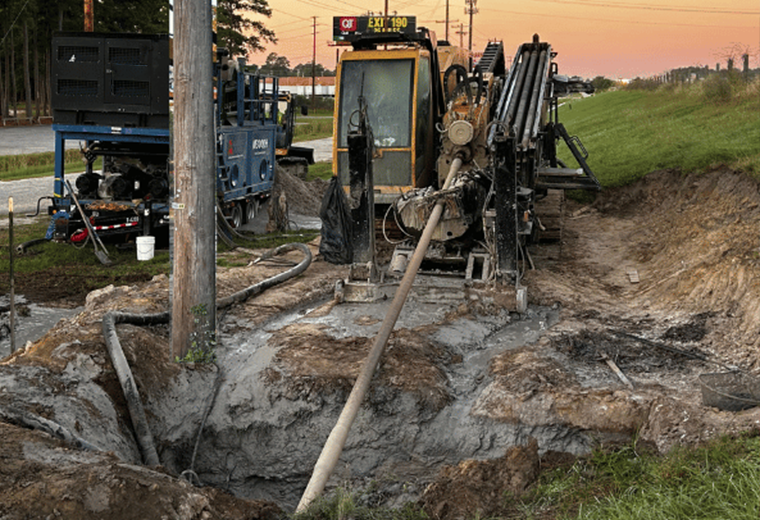
A friction welded rod, on the other hand, consists of three separate pieces. You have the middle tube body, plus two separate tool joints (the pin and the box) that are inertia-welded on. It’s a solid state welding process, meaning they don’t actually melt the metal. They spin one piece really fast and smash it into the other until they bond together. Sounds cool, huh? It is. But it’s still a weld.
And the thing about welds is, they’re always a potential weak point.
Where the Rubber Meets the Road—or the Rock Meets the Rod
Look, I’m not going to sit here and tell you friction welded rods are trash. No, they are not. They are intentional. They’re cheaper to make, and you get the benefit of that lower price. Certainly they can do the job for lighter jobs, shorter bores or less demanding ground conditions.
But if you ask me which is more powerful? That’s not even a question .
The weld zone on a friction-welded rod is what some guys call a “ring weld” – a thinner wall section with sharp edges right where the two pieces meet. And that abrupt change between coupling and rod leads to inconsistent performance. In simple terms? That’s where the stress builds up. That’s where the fatigue begins. That’s where the rod gives up on you eventually.
With the forged one piece rod you don’t have a weld zone to think about. The patterns of steel flow are continuous from end to end. The transition from the body to the connection is smooth and gradual, not sudden. When you’re throwing a rod through the wringer – high torque, aggressive steering, tough ground – that smooth transition handles the stress much better than a welded joint ever could.
Another customer told me one time, “I switched to forged rods and I’m getting almost double the life out of them.” Double. Consider that for a moment. They cost more up front, but you’ll only have to replace them half as often. That math comes together pretty quick.
The “But Wait, There’s More” Section:
Here’s something else to chew on.
Friction welding requires several heat treatment steps: one for the body of the tube, one for the tool joints, and one after the welding process. Each heat treatment modifies the steel’s metallurgy. And if you have different heat treatments in different areas of the same rod you can get inconsistent hardness and strength along the length of the rod.
Forged in one piece? Heat treatment (single) The whole shebang. All the way through. The whole way.
I’m not a metallurgist, mind you. I’m just a guy that has seen enough failed rods to know what works and what doesn’t. And what I have seen the last five years is forged rods last better, point blank.
What I Tell My Clients
Here’s what I actually say when someone asks me which rod to buy, not what my sales script tells me to say:
“If you are running small diameter bores, short distances or just getting started and watching your budget, friction welded rods will get you in the game. Nothing to be ashamed of. “Every shop has to start somewhere.”
Then I lean in a little closer, and say:
“If you’re doing serious work – long bores, tough ground, big rigs, or you’re just tired of pulling broken rods out of the hole – fork over the extra on forged one-piece. Your back will thank you for it. Your wallet will love you for it. And your crew won’t have to waste a Saturday digging up a failed rod that snapped 50 feet down.”
That last part usually grabs their attention. No one wants to be the guy that has to tell the client they’re tearing up the street because a rod went out.
The Final Word
Is one piece forged better than friction welded? Yes. No doubt about it.
Does that mean friction welded is rubbish? Nope. It serves a purpose.
But if you ask me (and you are, because I’m the one doing the writing) I like to have one solid piece of steel between me and the drill head. No welding. No weak point. No ring weld waiting to fail at the worst possible time.
I have seen too many jobs go sideways because somebody tried to save a few bucks on rods. And I’ve seen too many guys go forged and never look back.”
At the end of the day, the drill rod is the backbone of your whole operation. It’s what connects your rig to the work you’re really trying to do. What the hell would you put a weld in the middle of your backbone for?
Okay, that’s my two cents. If you have questions or want to debate me on it, shoot me an email. I always enjoy talking shop—especially when there’s coffee involved.
Keep boring smart
By Frank
HDD Engineering Sales
RICHDRILL EQUIPMENT CO.,LTD
Share :
Recently Released
- Richdrill HDD What Products Do They Make? A No-Nonsense Guide from a Guy Who Sells Them
- How Many HDD Drill Rods in a 20ft or 40ft Container? An Honest Answer from a Factory Guy
- How to Detect Fake HDD Drill Rods Before They Fail Downhole
- How Stabilizers and Reamers Add Stress to Your HDD Drill Rods (And What You Can Do)
- When to Scrap Your HDD Drill Rods: OD Wear, Wall Thinning and Ovality Limits