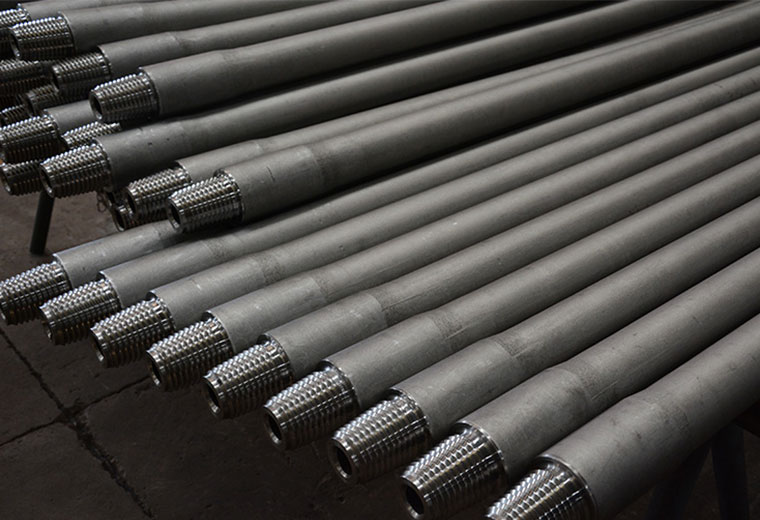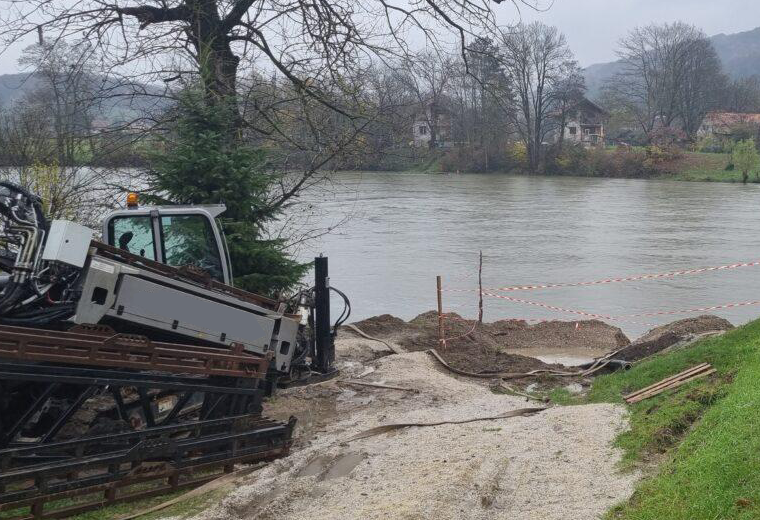
A few years ago I got a call from a contractor I’d been working with for a while. He was angry. He’d broken his brand-new S135 rods – premium stuff, cost him a fortune – on a bore that wasn’t even that hard. He was blaming the rods. I put the blame on his drill rig. So he was running 3.5 inch rods on a machine that was way over torquing them. The rods were not the problem. The problem was the match.
It changed the way I talked to customers. The thing is, most failures with drill rod aren’t because the rods are bad. They’re because somebody picked the wrong rod for the job. And I’ve been guilty of that too, early in my career. So we’ll save you the headache.
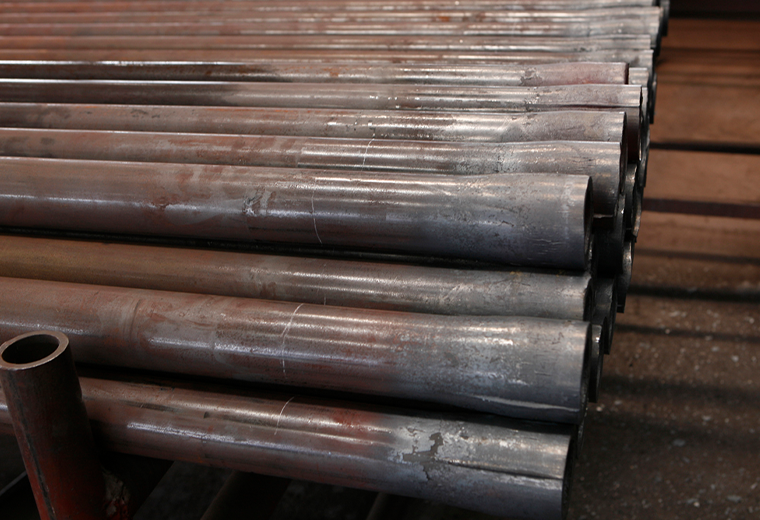
First Things First – What Is an HDD Drill Rod?
You know this but just so we are all on the same page, the drill rod is the metal pipe that connects your drill rig to the drill head . It transmits torque, thrust and pullback. It carries drilling fluid to the bit. Simple, no?
Except it’s not easy at all. Because that piece of pipe gets bent and twisted and pulled and pushed and vibrated thousands of times on every single bore. And if you choose the wrong one, you’re not only wasting money but also risking a fishing job that will eat up your entire profit margin.
I’ve seen this happen more times than I can count.
The Steel Grade Game – G105, S135 and What They Really Mean
Most people get lost here. You look at spec sheets and see “G105” and “S135” and your eyes glaze over. I see. But here is the easy version.
The number is the minimum yield strength in thousand of PSI . Thus G105 = 105,000 PSI min yield. S135 = 135,000 PSI. In simple terms: S135 is stronger. It can take more torque, more pullback, more abuse.
But stronger is not necessarily better.
Here’s where the “tech support guy who’s seen too many failures” kicks in. If you are running a smaller rig – say a D24x40 class machine – you probably don’t need S135. G105 will do the job fine and it’s cheaper. Put S135 on that rig, and you’re just paying for strength you’re never going to need.
On the other hand, if you’re driving a maxi-rig on a long-distance bore through hard rock, G105 may not be capable of the job. You need that extra muscle S135 gives you. I had one customer who kept breaking G105 rods on a D130. Changed to S135 and the breaks are gone. Same machine same ground different steel.
Also got R780 and E75 for the lighter duty stuff. But actually? 90% of the time most of you are deciding between G105 and S135.
Size Matters – Not As You Think
The most popular rod diameters are 50mm, 60mm, 73mm, 76mm, 89mm, 102mm and 127mm. Lengths normally vary from 3 metres to 12 metres.
Here’s the thing nobody tells you – bigger isn’t always better either.
A thicker rod is stiffer and more robust. Doesnt it? Sounds good. But the more rigid the means, the less flexible. And in HDD you need the flexibility to get around the curves. If you run a rod that’s too stiff for your minimum bend radius, you’re asking for fatigue failure.
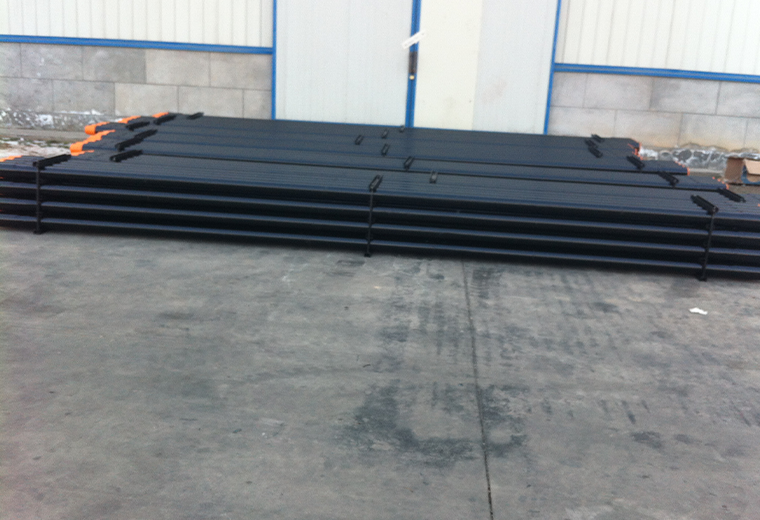
The silent killer of drill rods is fatigue. It occurs at stress levels well below what the rod is rated to handle. Every time you bend that rod through a curve you are putting cyclic stress on it – tension on one side, compression on the other. Do that enough times and the rod breaks . Usually at the joint .
I remember seeing a crew try to run 89mm rods around a 100 metre radius curve. The rods were technically up to the job. But after 500 metres of drilling they started cracking at the threads. They economised on the rods, but spent three times as much on fishing and downtime.
So my rule of thumb is: Match the rod diameter to your machines torque, and your bores minimum radius. Don’t just grab the biggest rod that fits.
Threads – The Most Overlooked Piece of the Puzzle
You’d be surprised how many guys call up asking about rod material and sizes and completely ignore the threads. Then they wonder why their joints keep cross-threading or galling.
API 5DP is the industry standard. Within that you have two main flavours:
API REG (Regular) – These are tough. Stronger tool joints, higher tensile strength Better resistance to bending. The catch? They do restrict flow a little because they don’t have a flush internal diameter.
API IF (Internal Flush) — These are a continuous smooth inside diameter, ideal for fluid flow. But the tool joints are thinner, so not quite as strong.
Which one do you pick? It depends on what you are doing. Long bores where fluid flow is important? IF can be your friend. Hard ground where you’re really pushing the torque? REG probably safer.
And then you have proprietary threads – Vermeer has Firestick/QuickFire, Ditch Witch has EZ Connect. If you own one of these machines, follow the manufacturer’s instructions. Mixing thread types is a surefire recipe for disaster . Seen guys try to change API threads to proprietary systems and destroy both the rod and the tooling in one shift.
One-Piece vs. Friction Welded – A Manufacturing Conundrum
Okay, this is a little technical but bear with me because it’s important.
Drill rods are sometimes made as one solid piece of steel, either forged or upsetted. Others are three-piece construction, with the tube body friction-welded to tool joints at each end.
Those welds ? They are potential weak spots. This is the point at which in high fatigue conditions the rod is most likely to break.
I’m not saying friction-welded rods are bad. They’re cheaper to build and for less demanding work they’re perfectly fine. But when you’re doing serious, demanding bores day after day? I’d take a one piece forged rod any day. The cost is higher up front but will last longer.
I have a customer in Texas that runs nothing but one piece rods on his D130. He said he went through a set of friction-welded rods every 18 months. The counterfeits? He’s in his third year and he’s still going strong. Crunch those numbers.
How to Choose Right—My Personal Checklist
After five years of doing this, here’s the process I take every customer through:
- What’s your rig? — What’s the torque rating? What is the push and pull? Fit the machine to the rod, not the rod to the machine.
- What’s the ground like? — Soft clay? Hard rock? Mixed? The harder the ground, the stronger the rods.
- Length and radius of bore? Longer bores and tighter turns = more fatigue. You may need a larger diameter or a higher grade of steel to get the flexibility you need.
- Which threads does your tooling use? — This one is not negotiable. Get this wrong and nothing else will matter.
- What’s your budget vs. your workload? — If you’re drilling every day, spend on quality. If it’s occasional work, you may not need the premium stuff.
I had a guy call me last month looking for S135 rods for his D10x15. I talked him down to G105. He saved him about 20% on the purchase price and he’s been more than happy. That’s the kind of conversation I actually enjoy – not just selling the most expensive thing but selling the right thing.
One Last Thing – Take Care of Your Poles
The best rod in the world will not survive if you treat it like garbage.
Change your lead rod often. Shift it to the back of the rack and put a new one in front. It’s like spinning the tyres on a vehicle. It spreads out the wear so your whole set wears out at the same time instead of one rod dying way too fast.
Grease your threads. Each. Time.. Single. I can’t tell you how many rods I have seen ruined thanks to someone getting lazy with the thread compound.
And clean your threads before you join them. Dirt and debris in the threads = galling = ruined connections = expensive issues.
Oh, and use a sub saver. It’s a cheap sacrificial piece that suffers the abuse so your expensive rods don’t have to. Change it often and your rod threads will thank you.
The Bottom Line:
Picking the right HDD drill rod is not rocket science but it is not a guessing game either. It involves fitting the steel grade, diameter, thread type and manufacturing process to your particular machine, ground conditions and job needs.
If you are not sure, call me up. Seriously . I’d rather spend 20 minutes on the phone helping you select the right rod than get a frantic call three weeks later because something broke underground.
The best sale I ever make is the one you don’t have to call me back on with a problem.
Keep boring smart
By Frank
HDD Engineering Sales
RICHDRILL EQUIPMENT CO.,LTD
Share :
Recently Released
- How to Detect Fake HDD Drill Rods Before They Fail Downhole
- How Stabilizers and Reamers Add Stress to Your HDD Drill Rods (And What You Can Do)
- When to Scrap Your HDD Drill Rods: OD Wear, Wall Thinning and Ovality Limits
- The #1 Mistake New HDD Operators Make With Drill Pipe (And How To Fix It Right Now)
- HDD Projects for River Crossings: How to Select Drill Rods That Won’t Buckle