Hello everyone out there. It’s the friendly neighbourhood drill rod guy from the factory floor.
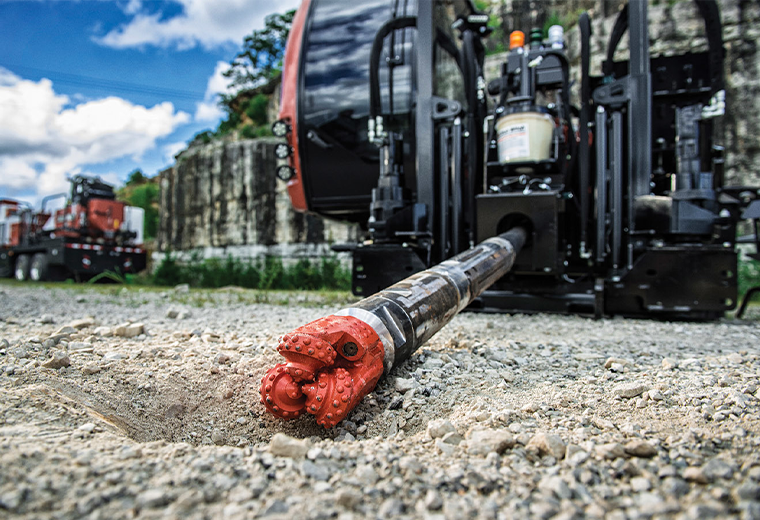
So the other day I get a call from a customer, we’ll call him “Panicked Pete.” Pete’s crew was on a river crossing job and they just broke the shoulder off a brand new tricone bit. Not undressed. Shoot. Like a bad relationship. He’s yelling, I’m cringing, and his foreman blames my drill rod. Does that sound familiar?
I asked the magic question: “Pete, what kind of thread is on your rod and what kind of torque did you run?”
Long pause. “Uh… the one that fit in? And we ugga-dugga’d it until it was tight.”
And there it sat. That’s when I remembered myself five years ago, my first month on the job, doing the exact same stupid thing. I thought a thread is a thread. Screw it on, crank it, send it. Right? Incorrect. It was my ‘ohhhhh, that’s why we keep breaking bits’ moment.
Let me save you the expense of repair. Here’s the raw truth on hooking up your HDD drill rod to a tricone bit.
The Thread Match Game – Not Tindermore
You don’t just take any two things that look like they might screw together. I don’t care about “almost fits.”
Most of our HDD rods are REG (Regular) threaded, such as 2-3/8” REG, 3-1/2” REG etc. But tricone bits? They like to throw curves. Sometimes they are API Reg, sometimes API IF (Internal Flush), and I’ve even seen some oddball MT (Mountain Taper) on older bits.
Here’s the kicker – a 3-1/2″ REG and a 3-1/2″ IF will thread together by hand, literally. They’ll turn on like lost brothers. You’ll feel so smart. “Look! It fits!”
Then you put 5,000 foot-pounds of torque on it and the box on the bit explodes like an overripe watermelon. Why is that? The thread pitch and taper are just different enough that only the first 2-3 threads are actually touching each other. The others? Just playing pretend. And pop. All that weight on just a few tiny threads.
My rule? Never believe your eyes. Trust the seal on the box. Stop if the bit’s pin doesn’t exactly match the rod’s box stamp, such as “2-3/8″ REG.” Get a thread gauge or contact your supplier. Yes, even if it’s 4 PM on a Friday. I made that mistake once. Once.
Torque Settings – Your “Feel” Is Cheating You
Now we’re going to talk ugga-duggas. Every crew thinks they have that one guy with the “magic arm” who knows just how tight is tight. News flash: his arm is not magic. It’s just certain.
Here’s a real story. Last year a crew was running 4-5/8” rods with a 12-1/4” tricone. They torqued it to what they figured was 8,000 ft-lbs. It felt solid. The bit kept working loose every three rods. They’d stop, crank it up tighter, cuss, and start all over again. At last they telephoned me. Had them check their torque wrench calibration, which was off by almost 2000 ft-lbs. They were just pulling up to 6,000. No surprise.
For a typical tricone on HDD rods you’d expect something like this (and check your own manufacturer specs please – I’m just a guy on the internet):
2-3/8” REG: 4,000 – 5,500 lb-ft
REG: 3-1/2” 7,000 – 9,000 foot-pounds
REG: 10,000 – 13,000 ft-lbs 4-1/2
But here’s the real pro move I learned the hard way: Under-torquing is worse than over-torquing. Huh? Yep.
If you don’t apply enough torque the connection will wiggle in and out with each rotation. It’s like a tiny hammer hitting the threads thousands of times. Eventually they gall, then they strip, then you’re fishing a cone out of a borehole at 2 AM. At least if you over-torque you might just stretch the threads a bit. Still bad. But not as common as people believe. Most of the field failures I see? Under-torque.
The 10-Second Cheat Sheet I Really Use
Before you spin that tricone on, run this checklist through your head like a weird little song:
Match the postage stamp. Not the vibe. Not “Same I think. The real letters and numbers.
Oiled the threads. Dry threads give you false torque readings. Just a little pipe dope will do.
Give it a good twist. Use a calibrated wrench or torque wrench. Your elbow does not count.
Torque a second time to 50 feet. Threads seat in. Give it a second snug. “ You’ll thank me later.
Look, I’m in the business of selling drill rods. I’d love to tell you ours are indestructible and you can just wing it. But I’ve dug too many broken bits and cracked boxes out of the mud not to tell you the truth. A good tricone to rod connection is 90% thread match and torque discipline. The other 10% is not Panicked Pete.
Just take those extra 30 seconds the next time you’re about to send it. Your back, your wallet and your foreman’s blood pressure will all thank you.
Now go make a hole. And, perhaps, buy a torque wrench that’s not a museum piece.
Keep boring smart
By Frank
HDD Engineering Sales
RICHDRILL EQUIPMENT CO.,LTD
Share :
Recently Released
- Richdrill HDD What Products Do They Make? A No-Nonsense Guide from a Guy Who Sells Them
- How Many HDD Drill Rods in a 20ft or 40ft Container? An Honest Answer from a Factory Guy
- How to Detect Fake HDD Drill Rods Before They Fail Downhole
- How Stabilizers and Reamers Add Stress to Your HDD Drill Rods (And What You Can Do)
- When to Scrap Your HDD Drill Rods: OD Wear, Wall Thinning and Ovality Limits