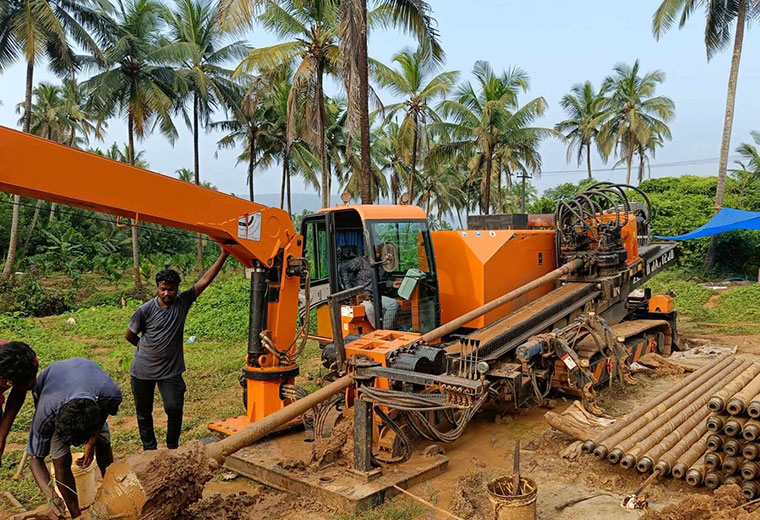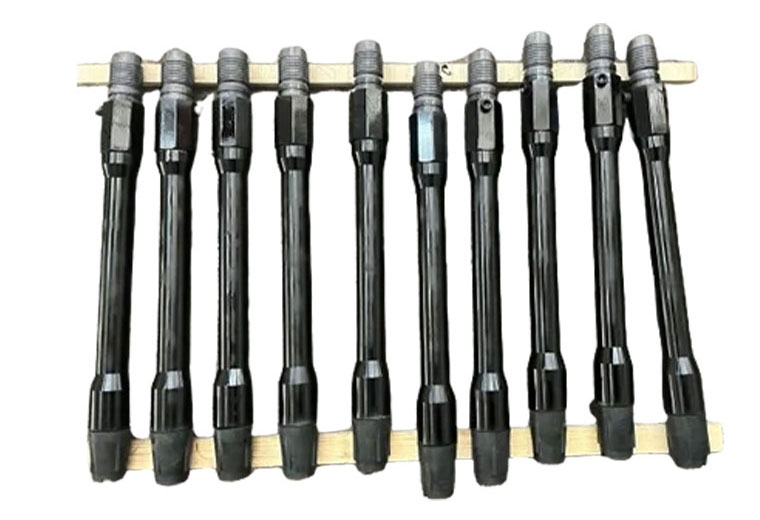
Look, I’ll be honest with you — when I first started in this industry about five years ago, I walked into our factory warehouse, saw all those steel pipes stacked up and thought, “They’re … all just pipes, right? Long ones. Shorter ones. So what’s the big deal?
Uh-huh. I was fairly green. And wrong. Dead wrong.
So, through a couple of muddy job sites, a couple of snapped rods (thank God none of them were mine, but I had some close calls) and about a thousand conversations with guys who actually run these rigs day in and day out. I’ve learned that choosing the appropriate drill rod for rocky ground is not like choosing a wrench off the shelf. It’s more like picking the right boots for a hike. Of course you can wear sneakers on a rocky trail. But you’re gonna hate life at mile three.
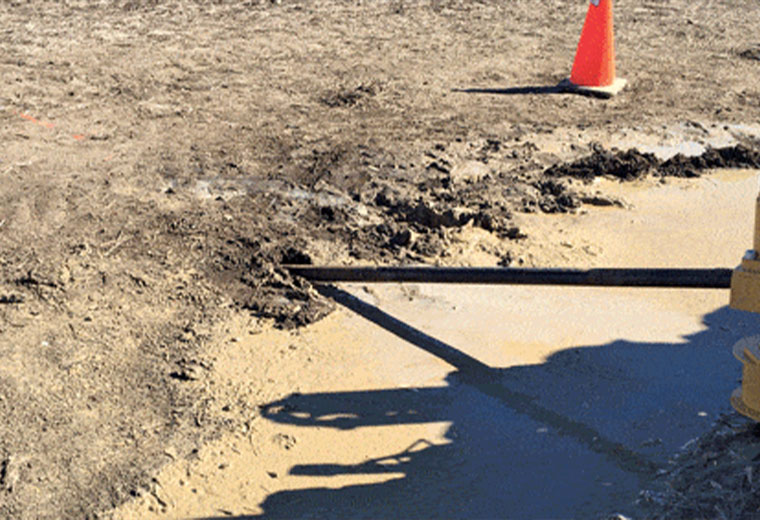
So let’s talk hard rock drill solutions – not like we’re in some boring catalogue, but like I’m sitting in your truck while you wait for the vac truck to arrive.
The “Oh Crap” Moment That Changed My Mind About Drill Rods
About 3 years ago I had a customer – let’s call him Dave – that was drilling through some nasty cobble and shale. He called me up, pissed off, because his rods were getting stress fractures after maybe 200 feet. He’d bought “the good stuff” from an enemy. Expensive. Good heat numbers. Fancy packaging.
But what Dave didn’t check was the wall thickness tolerance and the steel chemistry for that specific ground condition. He was at a rock playground, using a rod for soft clay. It’s like bringing a butter knife to a steak dinner.
We replaced him with a set of our heavy wall rods with a different tempering process. Same setup. Same guy. Same mud mix. He finished that bore and the rods looked almost as new.
That was my “aha” moment — not that our rods were magical, but that you match the tool to the puzzle, not just grab the shiniest one on the shelf. That’s the secret they don’t tell you in the brochure.
What Really Happens When You Hit Rock Bottom
This is the thing about hard rock drilling that a lot of guys don’t figure out until they’re already in trouble. It isn’t just the impact. Rock drilling subjects your drill string to alternating loads of high frequency. Every rotation, every vibration, every ounce of torque and thrust goes through that steel.
And tiredness? That’s the real gotcha. Fatigue can happen at stress levels far below your regular operating stress. You’re having a good day and then boom, your rod snaps off 800 feet out and now you’ve got a fishing chore to do.
In abrasive ground conditions, the drill rod has to withstand continuous tension, compression and rotational stresses. It has to bend and flex in the boring process, and still come back straight. That’s a lot of steel to ask of a piece of steel.
How to Select a Hard Rock Drill Rod
- The Steel Grade is More Important Than You Realise
The HDD market uses S135 for most of its drill rod. S135 is a standard steel alloy with a tensile strength of 135,000 lbs. And S135 does a lot of jobs just well enough. But when you are in hard rock? Maybe you want something a little more substantial.
Some rods use V145 or similar upgraded alloys that are rated higher, 145,000 lbs tensile strength. That difference is not just a number on a spec sheet. The added chemical properties give the steel an advantage in flexibility without sacrificing toughness. And flexibility is huge when your rod string is bending and recovering thousands of times across a long bore.
I’ve seen people cut corners on the steel grade to save a few bucks per rod, and I can tell you that the money you “save” up front goes away real fast when you are replacing rods every other job.
- One piece Forged vs Three piece welded
This is a big one and I don’t think enough people talk about this.
Drill pipe is often made up of three welded sections, with the tube body inertia-welded to the tool joint at each end. Those welds create a weak point — one that becomes more pronounced under the strain of tough drilling conditions.
The better choice? One-piece forged pipe, made from one solid piece of material. No weld stress failure. The upset ends on the forged pipe are machined and threaded to close tolerances . It gives a smooth upset that carries the load more efficiently and takes the risk of failure due to welding entirely out of the picture.
- Underrated Hero: Heat Treatment
So I’m gonna geek out on you for a second here, because this is something I wish somebody would have told me earlier.
All HDD tools start with a promise: strength without brittleness, hardness without fracture. “That’s what real heat treatment is supposed to do.” Steel is turned into a structure that’s hard on the outside and tough on the inside through processes such as quenching and tempering.
Correctly heat treated, a heat treated alloy provides you with uniform hardness, a tough core that absorbs shock loads and longer fatigue life that resists micro-cracks . Incorrect heat treatment? Then your drill string is vulnerable to hidden stress fractures, the kind that only present themselves when you’re 200 metres down the bore and it’s too late.
- Remember the Threads
Okay, this may seem obvious, but you’d be surprised how many dudes don’t get this. Each time you assemble a tool joint, observe and lubricate the threads on the end of each rod. Each time you assemble a rod, observe and lubricate the threads on the end of each rod.
And here’s a tip I picked up from an old-timer: use thread gauges as an augment to visual inspection. A thread gauge is a small, easy to use tool that may fit on your keychain. If all you do is rely on looks, then by the time you see a problem, it’s probably too late.
My rule on rocky ground personally
My personal rule is that I tell every customer that calls me up asking about a rocky job, if you can even smell gravel or fractured rock, put your standard-duty rods back on the rack. I’ve seen too many guys put standard rods in hard ground just to save a buck on the rental and then cry when they break off at 400 feet.
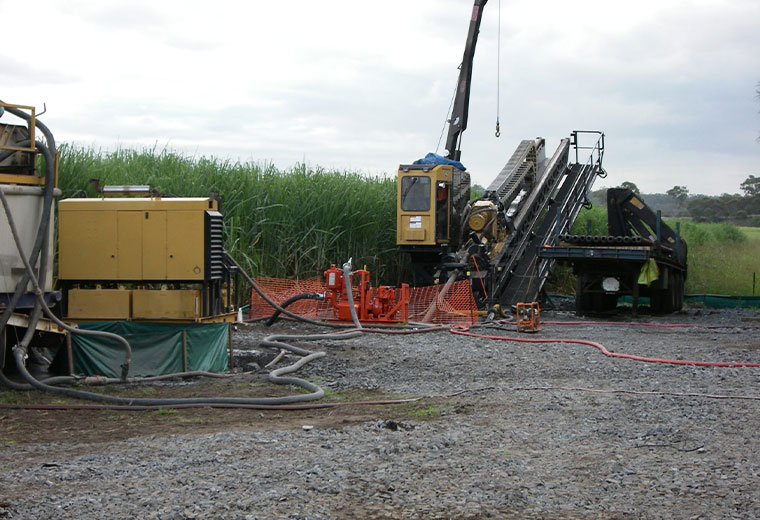
For hard rock, you want heavy duty or extra heavy wall rods, the chunky ones made for deep holes. That’s 0.375″ or thicker wall thickness, meaning more torque capacity and way better fatigue life. Yeah, they’re heavier, so your rig has to work harder just to swing them around. But trust me, that extra weight is peace of mind when you’re 800 feet in and hear that “crunch” sound through the ground.
A Brief Word About Double-Wall Rods
If you’re doing serious hard rock work, check out dual-wall rods. There is an inner pipe to transport the mud and an outer pipe to deal with the torque. The inner rod transmits the rotation directly to the drill bit, while the outer rod takes the push-pull force.
I have watched dual-wall rigs drill through 60 MPa rock at rates of 9 to 10 metres per hour, which is more than twice as productive as traditional methods. Plus they use a lot less mud (0.3-0.4 m³/min vs. 1.5 m³/min). That’s a lot of money saved in mud costs over the life of a project.
What I would tell my younger self
If I had the chance to go back to that first week in the warehouse and give myself some advice, it would be this:
Don’t select a drill rod based on price tag or what is on sale. Choose depending on what’s underneath. It doesn’t matter how much you paid for your rod. The ground is going to find every single weak point and test it out.
Match your rig’s capacity to your rod. Check max. spindle torque. Check max. thrust and pullback. Your drill rod needs a torque rating greater than the maximum your rig can provide. And those limits are determined by grade and wall thickness of pipe body.
And for god’s sake, rotate your lead rod in the rack regularly. Using only one rod to be first down on every job site will wear that rod at an unnecessarily fast pace.
Bottom Line
Hard rock drilling is no job for the faint of heart. If you are unprepared, it’s hard on equipment, hard on crews and hard on your budget. But with the right drill rod, the right steel, the right construction, and the right heat treatment it can be done, absolutely.
I’ve been doing this for five years now and I still get excited when a customer calls me up after a tough bore and says, “Man, those rods held up great.” That is the best feeling in this business.
So the next time you got a tough job, give me a call. Or text me. I’m happy to talk about what’s going to work best for your specific ground conditions. Because when it comes down to it, it’s not about the most expensive rod, it’s about the right rod for the job.
By Frank
HDD Engineering Sales
RICHDRILL EQUIPMENT CO.,LTD
Share :
Recently Released
- Richdrill HDD What Products Do They Make? A No-Nonsense Guide from a Guy Who Sells Them
- How Many HDD Drill Rods in a 20ft or 40ft Container? An Honest Answer from a Factory Guy
- How to Detect Fake HDD Drill Rods Before They Fail Downhole
- How Stabilizers and Reamers Add Stress to Your HDD Drill Rods (And What You Can Do)
- When to Scrap Your HDD Drill Rods: OD Wear, Wall Thinning and Ovality Limits