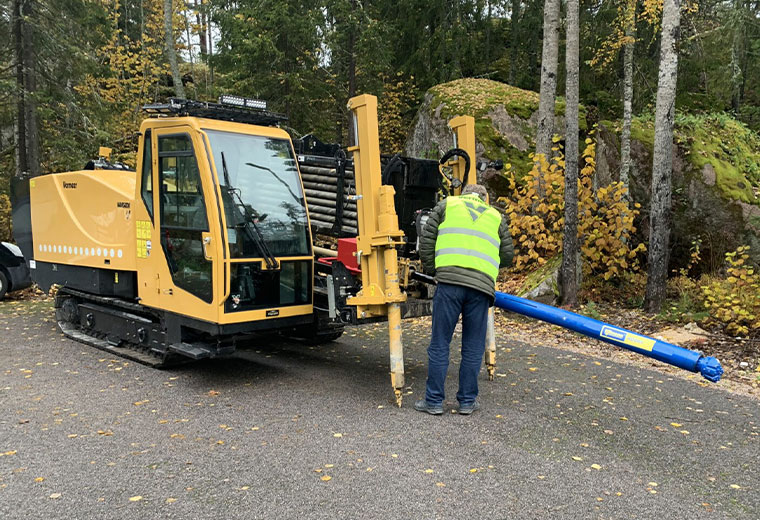
It’s me again, the drill rod guy from the factory who won’t shut up about threads and heat treatment. Get a coffee. Or a pint. I want to tell you something that cost me way too many muddy job sites and angry late night calls to learn.
The “yells!” Moment
A few years ago I had a regular customer who called me in a rage. Let’s call him Mike. He broke his new rods on a 200 foot river crossing. Once. Twice. He yells, I sweat. I flew to his yard, looked at the broken pieces, and… my face went red. Not on his account. Because of me. I sold him rods that looked good on paper, high-torque, nice steel, but were dead wrong for his rig’s chuck and his reamer size.
Classic mismatch. Sitting in a cheap motel that night, I realised: most people pick drill rods the way they pick a hammer — anything heavy looks fine. But HDD bars? They’re more of a relationship. You have to check for compatibility, not just strength.
So let me save you some cursing and time. So what actually matters when you choose HDD drill rods? No book learning, just dirt under the fingernails.
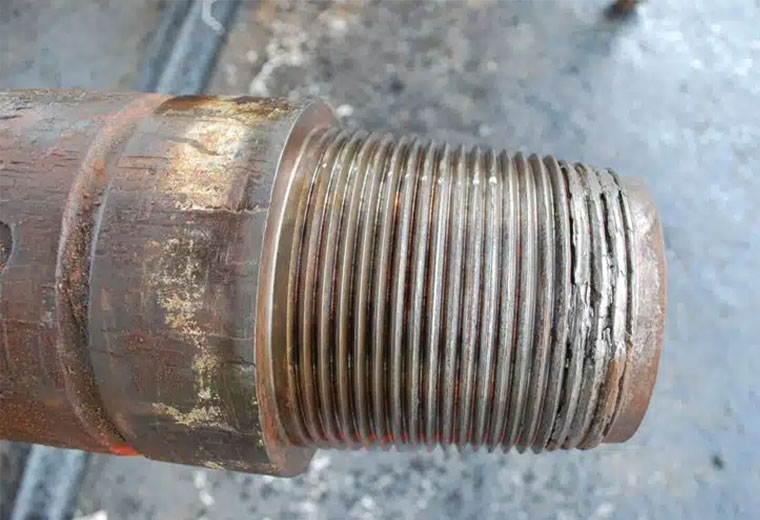
That small threaded connection? It’s all of it.
You know what really cheeses me off? Watching guys obsess over rod body steel and not the tool joint. That’s where the magic happens. And where the trouble begins. I have seen premium rods turn to junk because the threads were either too tight or too loose for the mating box. One trick I swear by: always spin a few test connections in your shop before you ship out. If it feels gritty or wiggles, leave it.
A good, steady stab-in makes the entire drill string happy. And for the love of mud, match the thread type to your existing rods – don’t mix API with some proprietary weirdo design unless you like buying new subs every week.
Steel grade – don’t go for the highest number.
Yeah, yeah, yeah, everyone wants “harder and stronger.” I used to do that as well. Then I saw a set of ultra-high-tensile rods go to glass on a rocky bore – snapped clean because they had zero ductility.
Now I tell people: look for tough, not hard. Something like 4140 or 4145H with a good heat treat. Not the cheapest stuff but not the overhardened racecar spec either. A good sales guy (like me, hopefully) will ask you what your typical ground conditions are. If they do not walk away.
Length and diameter – don’t assume.
This is a weekly conversation I have. Customer: “I need rods 3 metre long. Me: “What’s the breakout torque on your drill rig and what’s the length of your pipe loader?” Silence. Look, a rod that’s too long for your rig’s magazine is a nightmare. And what about a rod that’s too small for your back-reamer? You’ll snap it like a pretzel. One of my own screw-up rules: pick rod OD based on your max pullback. For 10,000 lb rig, do not go below 2-3/8″ OD. For 30,000 pounds? 3-1/2″ or larger. And length? Get what your crew can handle and not throw their backs out. 3m is common but some of the guys love 4.5m because you have less connections. Try it first.
Coatings and wear – the silent killer.
No one talks about surface hardness until their rods look like they’ve been chewed on by a rock monster. I’ve had rods pulled out of a limestone bore that had lost .080” of wall thickness in one week. I am a big fan of induction hardened or carburized rods now. They give you a tough skin on the outside but keep a softer tougher core. If you are in abrasive sand or shale, ask for rods with a harder case (55+ HRC on the surface). This isn’t some fancy marketing – it’s the difference between getting the job done, and fishing your line out one piece at a time.
Your reamer size tells you more than the spec sheet ever could.
This was my Mike lesson. He was running a 14” reamer with 2-3/8” rods. Disaster recipe. General rule I stole off an old driller. Reamer OD should be no more than 1.5 to 2 times your rod OD. Larger than that? You need bigger arms or a step down plan. Otherwise each rotation is putting bending stress where you don’t want it.
Last honest thought:
I make my living selling rods. Yeah, I want to take your order. But I would rather you call me with a weird question about thread lubricant than a picture of twisted steel in a trench.” So next time you’re out shopping, don’t just ask, “How much torque?” Ask: “Will this thread work for my subs?” “What is the surface hardness? “Mind if I try a set on my worst rock job?”
And what if a sales rep gives you a blank look? Go. Call me then. I’ll probably be in the shop with thread dope all over me, and I’ll be happy to talk your ear off.
Keep boring smart
By Frank
HDD Engineering Sales
RICHDRILL EQUIPMENT CO.,LTD
Share :
Recently Released
- Richdrill HDD What Products Do They Make? A No-Nonsense Guide from a Guy Who Sells Them
- How Many HDD Drill Rods in a 20ft or 40ft Container? An Honest Answer from a Factory Guy
- How to Detect Fake HDD Drill Rods Before They Fail Downhole
- How Stabilizers and Reamers Add Stress to Your HDD Drill Rods (And What You Can Do)
- When to Scrap Your HDD Drill Rods: OD Wear, Wall Thinning and Ovality Limits