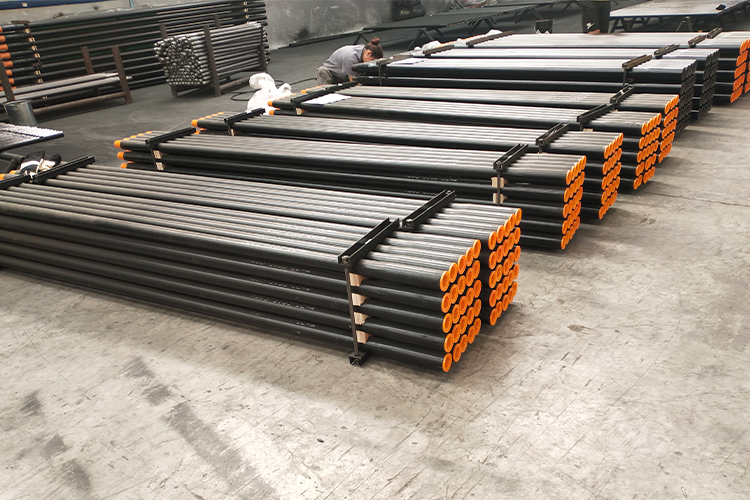
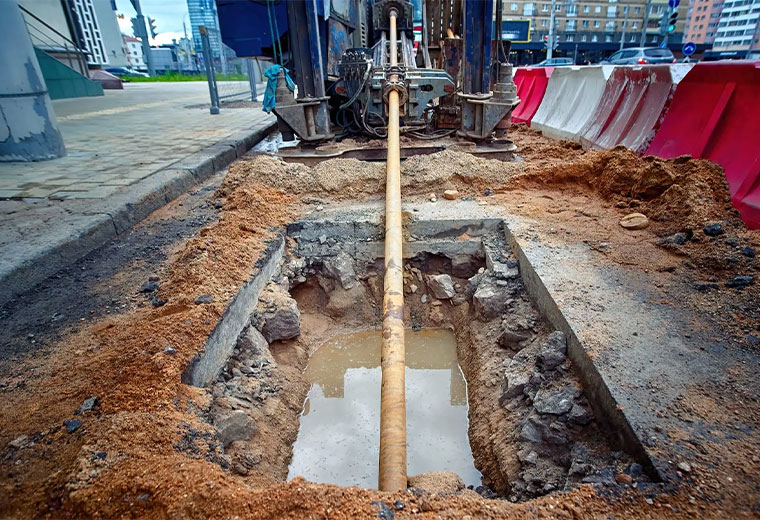
A contractor asks for twenty lengths of HDD drill pipe for a rock crossing. The buyer has the rig model and a measurement across the pipe body. The supplier asks one more question before quoting: is the machine running conventional single rod or its dual-rod system? The answer changes what makes up one working length, which connections must match and what the yard should count when the truck arrives.
What is the difference between single rod and dual rod in HDD?
A conventional single-rod string has one drill pipe at each position along the bore. A mechanical dual-rod system has an inner member running inside an outer pipe. On the Vermeer system described in its rock tooling guide, the inner rod transmits torque to the pilot bit. The outer member provides steering capability during pilot drilling and rotational torque for reaming. This separation lets the bit turn while the steering assembly holds an orientation.
That difference matters at the parts counter. A conventional rod enquiry usually begins with the pipe and its end connections. A dual-rod enquiry also needs to identify the inner member, how it engages the next section, and what the supplier includes in a quoted length. Two offers with a similar description can cover different amounts of steel and different parts of the drive system.
| Question for the supplier | Single-rod string | Mechanical dual-rod string |
|---|---|---|
| What adds one working length? | One compatible length of drill pipe. | A matching outer and inner arrangement. Confirm how the components are sold. |
| Which dimensions identify it? | Working length, pipe body and joint dimensions, and connection designation. | Outer pipe dimensions and connection, plus the inner member dimensions and drive interface. |
| What must the quote include? | Pipe part number, quantity and any separately required interfaces. | Itemized part numbers, quantity of each, and confirmation of the assembled working length. |
| What should receiving count? | Serviceable rods matching the ordered part number. | Complete matching sets and any spare inners or outers listed separately. |
Why a rig model and one diameter can leave the order open
A parts sheet can give more than one diameter for the same drill system. For example, the manufacturer’s D40x55DR S3 specification sheet lists a 1.66-inch inner rod diameter and a 2.63-inch outer pipe diameter under dual drill pipe. Both numbers describe the same model’s dual system. Neither number by itself identifies the complete replacement assembly. Those dimensions belong to that model and configuration.
When sending a measurement, mark its location on a photograph. A caliper across the pipe body answers a different question from a caliper across the joint. A photograph of the pin can help identify the item being discussed, but a familiar-looking thread is insufficient evidence that two systems fit. Ask the supplier to tie its proposed part to the installed pipe series and the machine-side and head-side interfaces. If the rig has been converted, include the conversion particulars with the original model information.
Does a rock bore always call for dual rod?
The word “rock” alone tells a buyer very little about the package to order. Vermeer’s rock tooling guide also discusses conventional drills using a mud motor or an air hammer. Those approaches provide different ways of working at the head. An existing conventional rig, the proposed downhole assembly and the site support equipment all belong in the comparison. A dual-rod quotation makes sense only if the rig and planned assembly support that system.
Give the tooling specialist the information behind the ground description. Identify whether the available record describes intact rock, fractured material or a transition along the crossing. Separate confirmed observations from the driller’s expectations. Also state whether the quote is for the pilot stage or for opening the hole afterward. A pilot head and a reamer perform different work; a request headed simply “rock tools” can attract prices for different stages of the same job.
Compare two quotations on a complete-length basis
Suppose a crew needs twenty additional working sections and has no loose components in stock. Offer A lists twenty complete dual-rod assemblies. Offer B lists twenty outer pipes and prices each inner member separately. Before comparing totals, ask the second supplier to extend its quote for twenty matching inners and confirm any additional items needed at the ends of the string. If those items are already on the machine, list them as available stock so purchasing can see why they were excluded.
Now change one assumption. The yard holds four spare inner members with recorded part numbers. Those four may reduce the purchase quantity after compatibility and serviceability have been confirmed. Their presence does not add four complete sections to the rack. A useful inventory note keeps three figures visible: complete working sets, accepted spare inners and accepted spare outers. That distinction prevents the same stock from being counted twice.
What to send with a request for HDD drill pipe
Start with the job requirement in plain language, such as “extend the existing pilot string by twenty working sections.” Add the rig identification, installed rod series, working length, photos of the identified ends, and any legible part numbers. For a dual system, include identification for both members. For a mixed fleet, say which rig the shipment is for. Richdrill lists double-wall and dual-wall drill pipe separately in its catalogue. Confirm the proposed item’s mechanical function on the drawing, since catalogue wording alone cannot establish interchangeability.
At receiving, compare the delivered markings and component count with the approved quotation before the shipment joins existing stock. If the delivery note says “20 pieces,” have the supplier clarify whether the unit means an assembly or an individual component. A signed packing list that reads “20 complete sections, each with the specified inner and outer member” gives the yard and the drilling crew the same starting count.