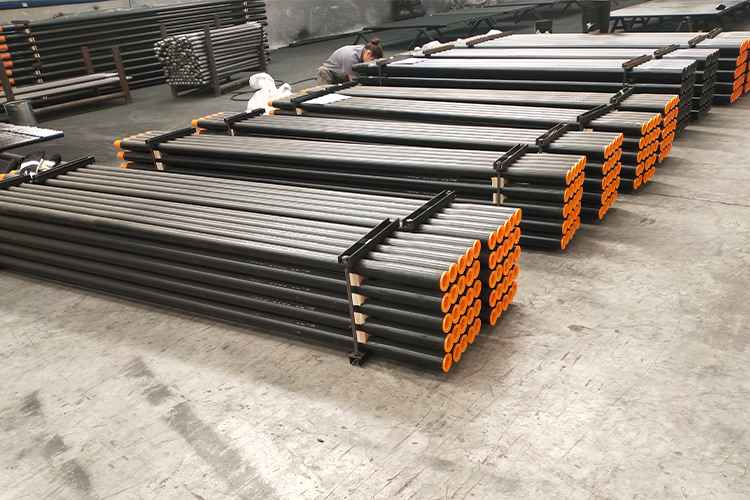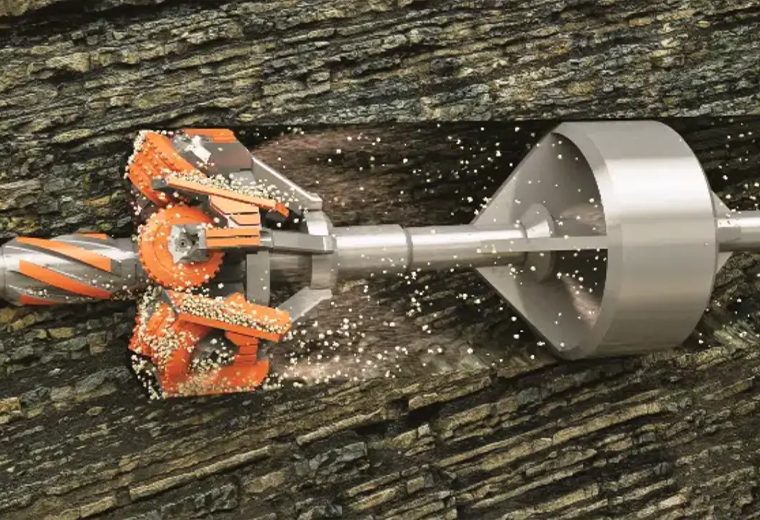
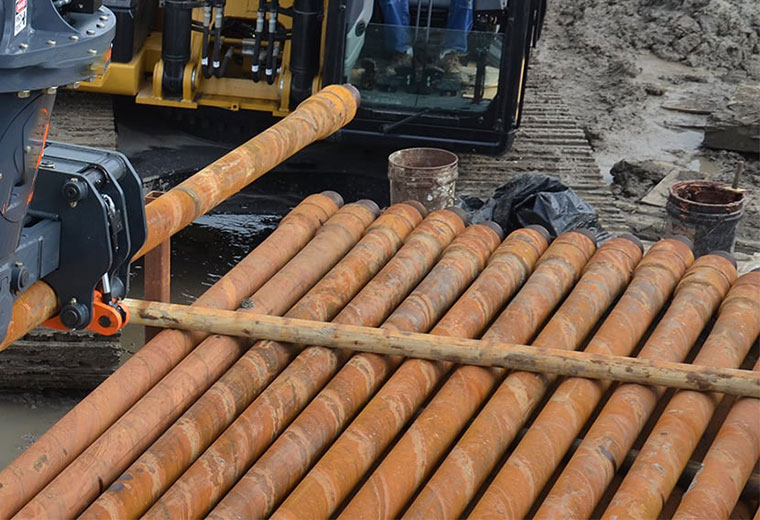
I remember my first year on the road, green as grass and full of book smarts. I was on a job site in West Texas, the kind of heat where you can feel your brain starting to slow-cook inside your skull. The foreman was a grizzled guy named Red that had forgotten more about drilling than I’ll ever know. He pointed at two piles of used rod.
One pile stood straight up, like an arrow. The other looked like a bunch of bent wire coat hangers.
He spat in the dust, looked at me and said, “Tell me, book-smart guy. Which of these was a ‘seamless’ one?
I was mistaken.
That day I learned the difference between Seamless and ERW is more than a line on a spec sheet. It’s the difference between coming home at 5 pm and spending your weekend with a torch and pipe wrench cursing the day you were born.
So let’s get past the corporate-speak and talk about this. Seamless or ERW HDD Drill Rods: Which One Is Really Stronger For The Hell We Put Them Through?
The “Spaghetti” Analogy (Just hang in there)
To get to the heart of this, forget steel for a second. Imagine spaghetti. Yeah, I’m being serious.
Suppose you have a long, unbroken piece of spaghetti. That’s your Seamless pipe. It is a single piece of dough worked and pulled into shape. No joints, no weak points. It’s just… plain pasta.
Now imagine that you took a flat sheet of lasagna , rolled it up into a tube , and glued the edge where the two ends meet . That’s your Electric Resistance Welded tubing. It looks like a tube, it acts like a tube, but inside it has a scar, that welded seam.
Now here’s my personal “aha” moment that changed the way I sell this stuff:
But in the lab, on a tensile tester, that ERW rod might actually hold up just fine. It’ll pull and stretch and it’ll hit its numbers.” But on the ground? We are not doing lab work. We are pushing, pulling, bending, vibrating and torquing these things through rock that has not seen the light of day since the dinosaurs died.
That weld on the ERW? It’s a tag. And if you fold a scar over and over again ( hello, fatigue stress), that scar becomes a crack. And that crack turns into a twist-off 300 feet down under the river.
The “Grain Flow” Secret (The good stuff is here)
This is where I get a little geeky.
Seamless pipe is pierced from a solid billet of steel so the grain structure of the metal flows with the shape of the pipe. It is like the grain of a piece of wood. So if you cut a bow out of a solid piece of wood it will naturally bend with the grain.
With ERW you have a flat strip you bend into a circle. The grain goes around the pipe, but it just stops at the weld. It’s a clunky segue. Even with all the heat treatment in the world (and trust me, the good mills do try), that weld zone is a different animal than the rest of the pipe. It is more brittle or harder and it doesn ‘t bend like the rest of the rod does, for sure.
So when you’re driving that boring tool and putting a serious bend radius on the string, the Seamless rod flexes as one piece of metal. The ERW bar? It battles itself. The body wants to flex, the weld zone wants to grab. It is in that internal fight that the micro-cracks begin.
Let’s Get Real About the “Cost” Argument
But I know what you’re thinking. “Buddy, I can get ERW rods for about 20-30% less. Why am I interested?”
I see. I do. I’m a salesman, yes, but I’m also a human being with a budget. There’s a reason ERW exists, it’s cheaper to make. You take a coil of steel, roll it, zap it, squeeze it and boom, you’ve got yourself a pipe.”
But here’s the “dirty little secret” I tell my regulars:
You don’t buy the rod, You are buying the “not-stopping.”
I had a client, we’ll call him Mike, who swore by ERW because he could get three strings for the price of two seamless strings. He bragged about his “savings” for a year.
Till the day one of those ERW rods broke at the weld during a pullback under a major highway.
This isn’t a $500 fishing trip we’re talking about. This guy is talking about a $15,000 fishing job, a ruined bore, a pissed-off general contractor and a $2,000 emergency freight charge to get a replacement string to him overnight. That nite he called me at 11 pm. I could hear the tiredness in his voice, even above the noise of the generator.
The following week he moved to Seamless and never looked back.
The Last Word? (And why I don’t hate ERW)
Look, if you’re doing short straight bores in soft clay and you’re just trying to get a water line under a driveway? Do not waste your money. Buy the ERW. It will get the job done. Nothing to be ashamed of in that game.
But if you’re asking me, personally, as someone who has seen the carnage, which manufacturing method yields better strength for Horizontal Directional Drilling?
Smooth. Definitely. No contest.
It’s not just about the tensile strength you see in a catalog. It’s about being tough. It’s about being consistent. It’s knowing that every inch of that pipe, from box end to pin end, is going to react the exact same to the stress that you’re putting on it.
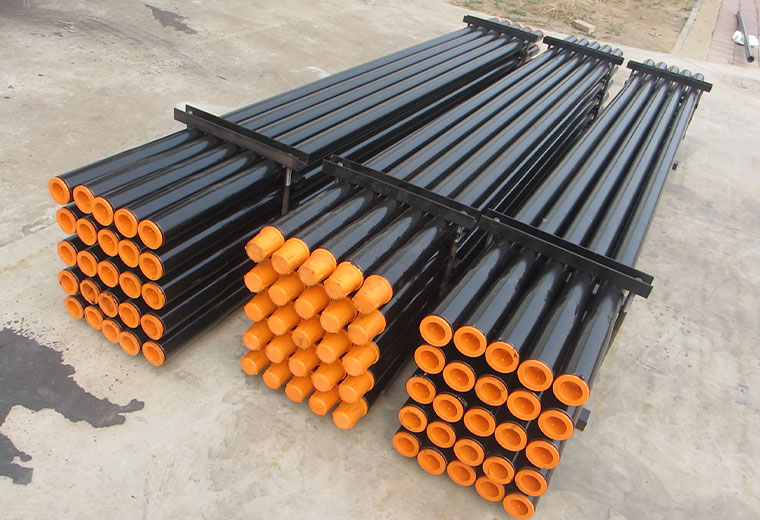
“When you’re 500 feet in the ground and the bore is starting to look like a rollercoaster, you don’t want a weld seam down there wondering if it’s going to hold up.” “You want a good piece of steel that’s just going to shut up and take the abuse.
Well, that’s my soapbox for the day. I’d love to hear your war stories. Do you ever get catastrophic weld failures? Or are you a die-hard seamless fan like me?
Drop me a line in the comments below or email me. Always willing to talk shop.
Keep your string of rods straight (except when you are steering of course) and drill safe.
By Frank
HDD Engineering Sales
RICHDRILL EQUIPMENT CO.,LTD
Share :
Recently Released
- How to Detect Fake HDD Drill Rods Before They Fail Downhole
- How Stabilizers and Reamers Add Stress to Your HDD Drill Rods (And What You Can Do)
- When to Scrap Your HDD Drill Rods: OD Wear, Wall Thinning and Ovality Limits
- The #1 Mistake New HDD Operators Make With Drill Pipe (And How To Fix It Right Now)
- HDD Projects for River Crossings: How to Select Drill Rods That Won’t Buckle