I’ve been selling and obsessing about HDD drill rods for some 5 years now. Before that I was on the other side of the fence running rigs, cussing out broken rods, and trying to figure out why my threads looked like they’d been through a war after a few hundred feet. And when I say I’ve had my fair share of “aha” moments, I really mean it. And today, I want to talk about one that took me way too long to fully appreciate: rotary speed.
Yeah. I know. Sounds boring right. Just spin the goddamned thing and go. But wait. Because the speed you spin that string at is literally the difference between a rod that lasts five years and a rod that turns into scrap metal in six months. And I’m serious.
The Day I Quit Being a “Speed Demon”
I’ll tell you about a job I had when I was younger. I was running a medium-sized rig at a ford. Nothing wild, Clay, sandy clay. I was young, I was invincible, and I had a production schedule to keep. My logic was simple more RPM is more footage less money. Right?
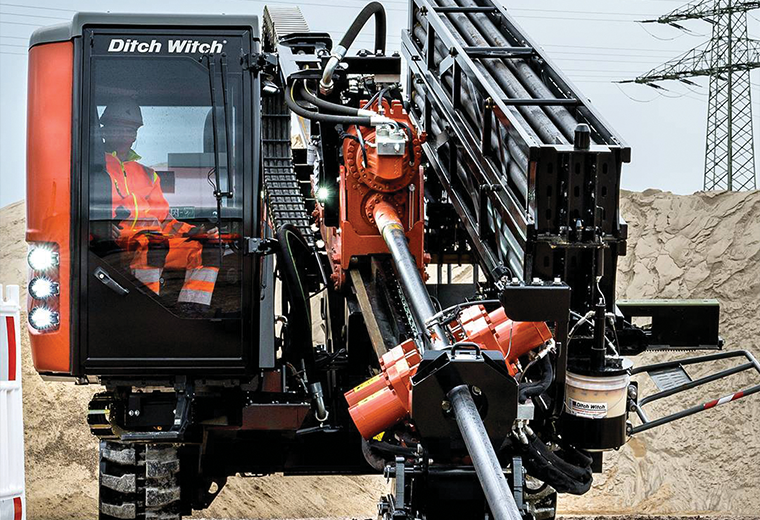
So I turned it up. I was spinning those rods about 180, 190 RPM. The drill was whirring. We was getting a hole like mad. I felt like a smart guy. For the first 200 feet or such.
Then the torque started creeping up. Then the mud pumps started to labour. Then BANG! The worst sound in the world. A screw-off, fifty feet below. We reeled it in. But the threading on either end? All gaulded. Smoked. Those looked like they’d been ground with a grinder. That single-rod bearing was fried. And the one it was hooked up to? The box end was so stressed it had micro cracks you could barely see with the naked eye.
That was my wake up call. The next week I spent talking with our metallurgist, our old school drillers and my dad (who’s been in this game since before I was born). And I got it: RPM is not about fast. That’s about power.
The Real Reason High RPM Is a Thread’s Worst Enemy
Here’s the thing no one tells you when you’re starting out. The threads on your drill pipe? They do more than just hold the rods together. They are the handshake between each and every joint. And if you spin them too fast, that handshake gets a death grip.
Think about it: When you’re running high RPM you’re generating a lot of heat. And I don’t mean heat that’s warm to the touch. I’m talking about the heat from friction that causes the metal to expand on a microscopic level. As that metal expands , the threads get tighter and the lubrication film that is supposed to be there ? It falls apart. You have metal to metal contact now. And that is the way you get galling. Once galling starts, it is like a snowball rolling downhill. It only gets worse.
But that’s the tricky bit. The tiredness. High RPM not only wears the threads from the outside, it chews them up from the inside. Every single rotation is a bending cycle for the bar. At low RPM the rod has a split second to “relax” before the next cycle. At high RPM, it’s just constant, unrelenting pressure. It’s like you’re bending a paper clip back and forth. Don’t rush it and it may last for a while. Do it fast and it breaks in half in ten seconds. Your rods are exactly the same.
My “Goldilocks Zone”
Then, what is the magic number? I know you want me to say 145 RPM and send you on your way. I will not do that, though, because it is a lie. How long your string is. The diameter of your rod, how powerful your rig is. It all depends, the ground. But this is the rule of thumb I’ve come up with after years of trial and error, and it’s worked well for me.
For average soil conditions I run between 100 and 140 RPM for most 2-3/8″ to 2-7/8″ rods. That’s my happy place.
If you do any less than that you’re not clearing cuttings effectively. You’re just crushing them up and re-grinding them, which creates its own set of problems (hello, stuck pipe). Anything beyond that and you are just asking for thread wear and fatigue issues.
But here’s the “tech” part that really matters. I stopped using the RPM gauge as a speedometer. I started to think of it as a torque management device. That was my real “aha” moment.
Because the real enemy is not the number of RPMs. It’s the bounce and the shudder that comes with it. If your torque is smooth, your weight on bit is perfect and you’re spinning at 160 RPM then you’re probably okay. But if you’re at 130 RPM and your torque is all over the place ’cause you’re bouncing off a hard layer? It’s that erratic rotation that kills your threads. This results in small shock loads that stress the roots of the threads over time and create fatigue cracks.
A Little Tale of a Customer Call
A couple of months ago I got a call from a customer who was livid. He said our rods were “garbage” and the threads were coming apart after only 800 feet. “What RPM are you running?” I asked.
- he said. Same old.”
I asked, “What is your ground?
“Hard shale, with a few chert nodules,” he said.
“And what is your pressure?” I asked.
He said, “Whatever it takes.”
Got the problem? What he was trying to do was force a high RPM through a formation that made the drill head chatter like a jackhammer. Those threads gave a little jolt with each bounce. We reduced him to 110 RPM and increased his mud flow to better clear the cuttings and let the weight of the string do the work. Two weeks later he called me back, absolutely sheepish. Same set of rods,” he said. Just finished 1,800 feet. “Threads look like new.”
That’s not magic. It’s just understanding that RPM is a servant, not a master.
So What Would I Actually Recommend?
Look, I’m not going to tell you what to do. You’re the one up on the rig. But I will give you the same advice I give to every customer who buys rods from me.
Begin small, move up. Just don’t crank that thing up to 180 like the last guy did. Start at 100 Mind your torque. Watch your return mud . Feel the rig. If it’s smooth and you’re making progress, try to bump it up 5 or 10 RPM. The second you feel the vibration start to climb or the torque start to spike? This is the ceiling. Back off.
Listen to your machine. I am serious. I can walk onto a jobsite and tell you if the RPM is too high from the whine of the hydraulic motor. If it sounds like yelling at you, it probably is. Treat your rig as a partner, not a tool.
Rotary speed is all about the whole system. If you are drilling at high RPMs, you better have a high volume mud pump to match. You need to get those cuttings out of the hole before they get re-ground and become an abrasive paste that eats your threads. It all fits together.
The Bottom Line (No Sales Pitch I Promise)
I am not going to sit here and tell you that if you buy our rods all your RPM problems will go away. Sure, a good rod can take some abuse. But the best rod in the world won’t work if you abuse it like a racecar engine. The truth is that, in the long run, slowing down will make you more money than speeding up ever will. I learned that one the hard way with a twisted off rod and a $2000 fishing job. I hope you can learn it here for free, right now, sitting in your truck with your coffee.
So the next time you’re at the controls, take a breath. Look at that RPM metre. And ask yourself: am I spinning this because I have to, or because I’m in a hurry?
Your threads will be grateful. And so will your purse.
Stay safe out there! And if you ever want to talk shop, you know where I am.
By Frank
HDD Engineering Sales
RICHDRILL EQUIPMENT CO.,LTD
Share :
Recently Released
- Richdrill HDD What Products Do They Make? A No-Nonsense Guide from a Guy Who Sells Them
- How Many HDD Drill Rods in a 20ft or 40ft Container? An Honest Answer from a Factory Guy
- How to Detect Fake HDD Drill Rods Before They Fail Downhole
- How Stabilizers and Reamers Add Stress to Your HDD Drill Rods (And What You Can Do)
- When to Scrap Your HDD Drill Rods: OD Wear, Wall Thinning and Ovality Limits