Let me be honest with you, when I first started out in this industry 5 years ago, I didn’t understand why the guys with D7x11 rigs got so particular about their drill rods. They all looked alike to me. Same length, same shiny threads, same steel.
Then one day a customer called me up super frustrated because his new rods wouldn’t even thread into his machine. He got the wrong ones, it turns out. He hung around for two days waiting for the right shipment. That phone call? That was my ‘aha’ moment. Specs matter. They matter a lot.
So if you’re running a Vermeer D7x11 Series, let’s get down to business. I’ll tell you exactly what fits, what actually works, and when it makes sense to just upgrade, rather than replace.
The D7x11 in a nut shell
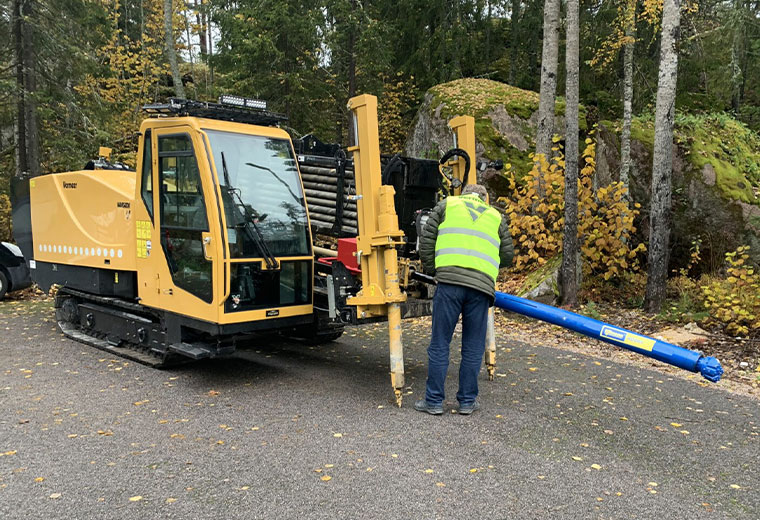
This little rig is a work horse. It is a mini directional drill that fits right in that 0-10,000 lbs pullback sweet spot. Vermeer designed it for those medium-sized utility jobs, fibre optic pulls and residential work where you don’t need a monster rig but do need reliability.
The D7x11 Navigator Series II is powered by a Kubota D-1505 engine delivering 1,100 ft-lbs of rotational torque to produce approximately 7,800 to 7,900 lbs of thrust and pullback force. It’s small, easy to trailer around and, if I’m honest? This machine is almost overkill for the kind of short bores and suburban work most guys do. But here’s the rub — all that capability means squat if your drill rods are a mismatch.
So What Rod Should You Actually Stick In This Thing?
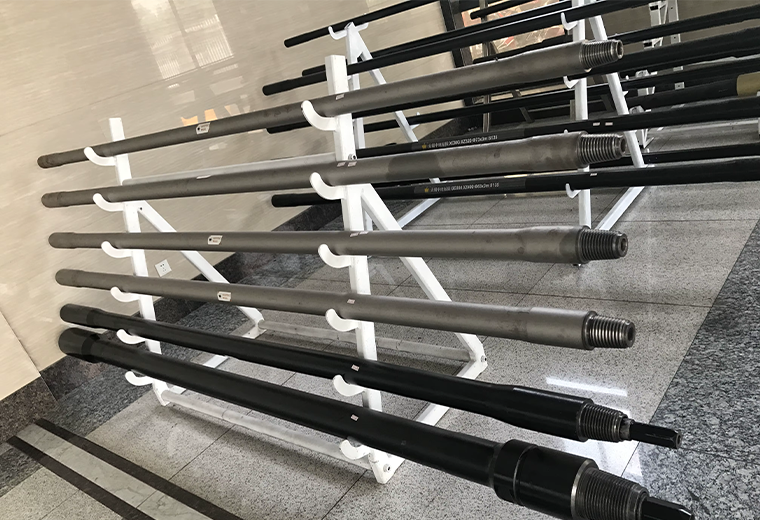
The D7x11 OEM spec is a 1.66-inch OD rod (approximately 42.2 mm) with a 6-foot effective length, threaded with an FS1 #200 connection. Wall thickness is 0.256 inches (approx. 6.5 mm). The steel grade you really want to see is S135 premium grade or higher – that’s the stuff that can handle the vibrations, the bending radius downhole, and the daily beating without cracking up on you.
Vermeer’s own Firestick line is without question the gold standard here. It’s made from high carbon alloy steel, heat treated and with that double-shouldered design that just works in high torque situations. Firestick also uses V145 grade steel, giving you a little more muscle than your typical S135 options.
But I know pricing is a real deal. That’s where the aftermarket stands. If you’re on a budget, Vermeer’s own Silver Series rods are actually a solid middle ground—they use S135 steel but go through the same threading and quality inspection process as Firestick, so you don’t lose nearly as much as you’d think. And I’ve seen some really good one-piece forged rods from guys like MP Technik and Universal HDD that are built to the exact same 1.66″ OD and FS1 #200 thread pattern.
The “Wait, I Didn’t Know That” Moment (aka the Upgrade Episode)
Here’s something that took me way too long to realise — upgrading your rod doesn’t always mean buying a more expensive rod. Sometimes that means changing to a better steel grade for what you’re actually drilling through.
A few years ago I had a customer in the pacific north-west who kept breaking rods in glacial till. Each month, another thread cut, another day’s earnings gone. He was running normal S135 rods which are fine for sandy loam and clay but glacial till has these buried boulders that just beat the hell out of the metal.
I talked him into trying a set of 4145H MOD rods – the high-carbon cousin of your common 4140 steel. Better hardenability in thick cross sections, much more wear resistance in bad ground conditions, more tensile strength. Three months later he called to say he hadn’t broken a rod since then. That’s not marketing, that’s just the right tool for the job.
If you are mostly drilling in soft dirt and clay then S135 is plenty. But if you’re routinely fishing over rock, cobble or packed glacial till, spring for the 4145H or a premium V145 rod. Yes, it costs more up front but you save 10x that in down time and replacement rod cost.
Maintenance Nuggets That Will Save Your Backside
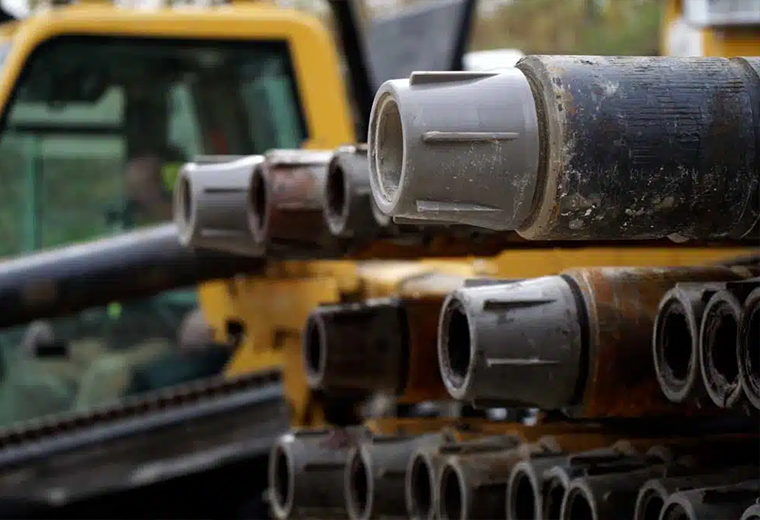
One thing that constantly amazes me is that I still see operators running the same lead rod for weeks without rotating it. The first rod behind the drill head takes much more stress than the rest of the string. It is wearing out 3 times faster than the rear rods.
Take that lead rod off once a week and put it at the back of the rack. Bring in a newer rod. Your whole set will wear evenly and last twice as long. Think about rotating your truck tyres, you know that increases the tread life. Same idea.
Also keep your threads clean and greased. Every connection. Every time you add a rod. Contamination wears down those finely machined threads faster than you might think. And if your sub saver starts to look jagged or rounded? Change it. A bad sub saver can ruin an entire basket of rod before you even realise that something’s wrong.
Bottom line
Picking the right drill rod for your D7x11 isn’t rocket science – but you’re not going to guess it either. 1.66″ OD, FS1 #200 thread, 6-ft length, Min. S135 Begin there. If your ground gets nasty, or you push this little rig harder than most, step up to 4145H or V145 steel. And please, for the love of all that is holy, turn your lead rod and grease those threads .
Have a question about a particular brand or ground condition? Just drop me a note. I love talking about this kind of stuff and I promise you I won’t give you the sales pitch. Just the straight ‘I’ve been in the shop with guys who learned the hard way’ advice.
Keep boring smart
By Frank
HDD Engineering Sales
RICHDRILL EQUIPMENT CO.,LTD
Share :
Recently Released
- Richdrill HDD What Products Do They Make? A No-Nonsense Guide from a Guy Who Sells Them
- How Many HDD Drill Rods in a 20ft or 40ft Container? An Honest Answer from a Factory Guy
- How to Detect Fake HDD Drill Rods Before They Fail Downhole
- How Stabilizers and Reamers Add Stress to Your HDD Drill Rods (And What You Can Do)
- When to Scrap Your HDD Drill Rods: OD Wear, Wall Thinning and Ovality Limits