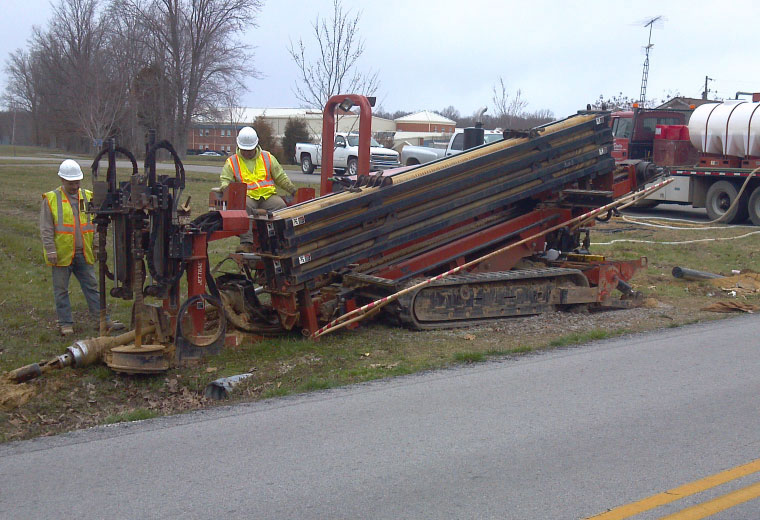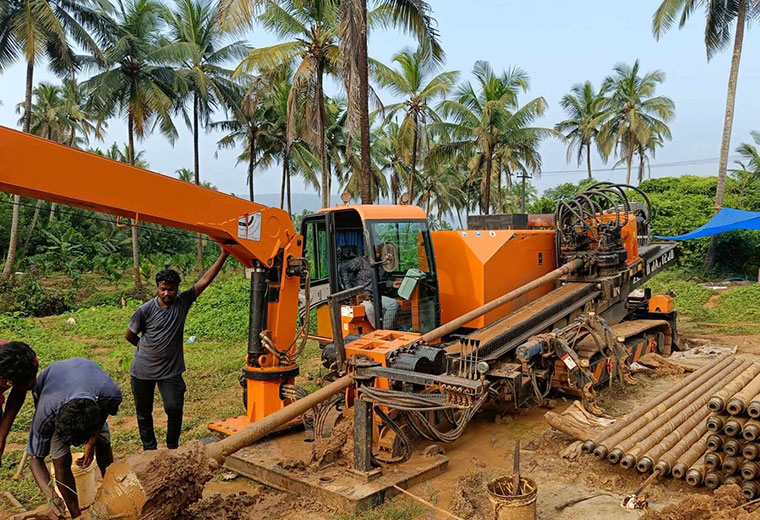
I was sitting here the other day, looking at a pile of HDD drill rods that were about to be sent out, and I thought, “This stuff we do every day is kind of magic, isn’t it?”
I mean that. Give it some thought.
You are at work. Your rig weighs a few tons. You put a piece of steel in the ground at Point A and try to get it to pop out of a hole the size of a coffee can five hundred feet away at Point B. How does that work? How do you say to a piece of metal underground, “Hey, go a little to the left here”?
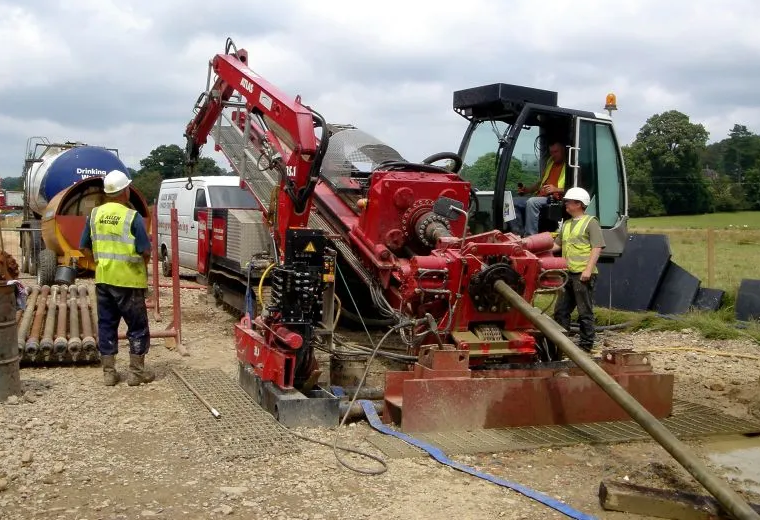
I remember when I was new to this job and thought there was some kind of remote control involved. It’s like a drone, but it drills. Spoiler alert: it’s much easier—and honestly, much cooler—than that.
So, let’s take a look behind the curtain of the drill rod and talk about how we really steer these things.
It’s not rocket science. It’s a bend
When I figured out that the secret to steering isn’t in the rod itself but in the bit assembly, that was my biggest “aha!” moment ever. In particular, that small “bent sub” or uneven bit face at the front.
This is what you need to know.
When you turn the whole drill string, which we call “rotary” mode, the bent face spins around and around. It cancels itself out. The hole goes straight.
But what happens when you stop turning? When you just push?
That is the moment of magic.
You point that bend to 12 o’clock (in your head, you use a clock face system) and push. The drill string doesn’t move, but the uneven face wants to move in the direction it’s pointing. It literally walks the hole up. You want to go to the right? Set the bend to 3 o’clock and push. Slide, slide, slide.
The steering happens in the “Sliding” mode. It feels like skiing. You go straight if your skis are straight (rotating). You can make a turn by angling them (the bend) and pushing.
The Tracker Tango
You can’t steer if you can’t see, of course. This is where the driller and the tracker start to dance.
A few years ago, I was working and we had a new guy on the locator. The driller would make a slide, and the new guy would yell over the radio, “Uh, you’re at 14 feet, depth is good.” But that’s not enough. The driller needs to know which way the bend is going.
That “face of the clock” I talked about? That goes through the sonde, which is the small transmitter behind the bit. It tells the tracker how much the tool is rolling. The tracker then says to the driller, “Your face is at two o’clock.” To come up, you need to turn to 12.
It sounds like a crazy game of telephone if you’ve never played it. But what happens when a good crew gets in the zone? It’s a dance. The driller turns the string to get the right “face,” pushes for a few feet of slide, and then goes back to turning to straighten it out.
The “Oh No” Moment (And How We Stay Away from It)
This is what they don’t always tell you in the sales brochures.
Mistakes happen even when you do everything right. Magnetic interference from other pipes, small changes in the ground, or even the operator taking a coffee break and not hearing a radio call correctly.
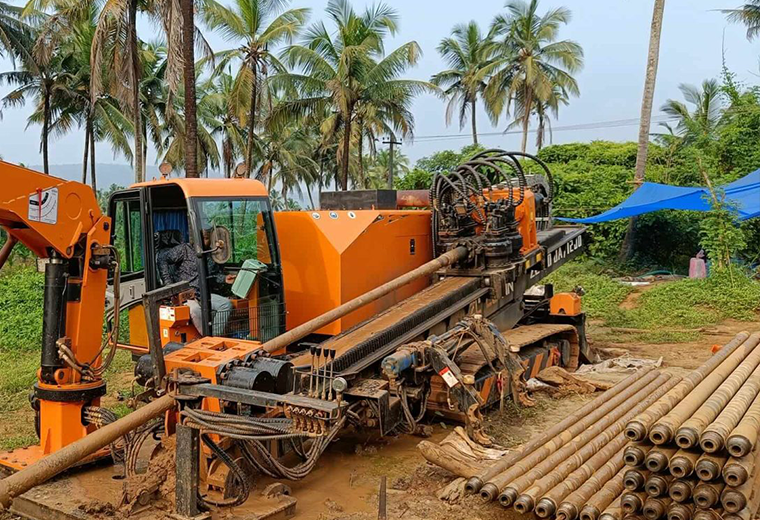
I used to believe that the survey data at the end of the day was true. You know, the printout from the computer that shows the nice line in the ground? I learned the hard way that it’s just a really good guess. The “Ellipse of Uncertainty” is what the industry calls it. It sounds like a bad science fiction movie, doesn’t it?
If you only use downhole sensors, the “maybe it’s here, maybe it’s there” circle gets bigger the deeper you drill. That’s why they use “walkover” systems or even wire grids on the surface to “tie in” the location and make the ellipse smaller on the big, scary crossings, like those under rivers or highways.
The Gut Feeling
After five years, I’ve come to understand that the rods are just the message. They send the push and torque from the rig to the bit. But the real “steering” happens when the driller’s hands, the tracker’s eyes, and that little bend in the ground all work together.
I still enjoy seeing a crew nail an exit pit. It never gets old.
Do you have a story about a steer job that went wrong or one that went perfectly? I’d love to hear it. Send me a message or come by the shop; there’s always coffee.
Keep boring smart
By Frank
HDD Engineering Sales
RICHDRILL EQUIPMENT CO.,LTD
Share :
Recently Released
- Richdrill HDD What Products Do They Make? A No-Nonsense Guide from a Guy Who Sells Them
- How Many HDD Drill Rods in a 20ft or 40ft Container? An Honest Answer from a Factory Guy
- How to Detect Fake HDD Drill Rods Before They Fail Downhole
- How Stabilizers and Reamers Add Stress to Your HDD Drill Rods (And What You Can Do)
- When to Scrap Your HDD Drill Rods: OD Wear, Wall Thinning and Ovality Limits