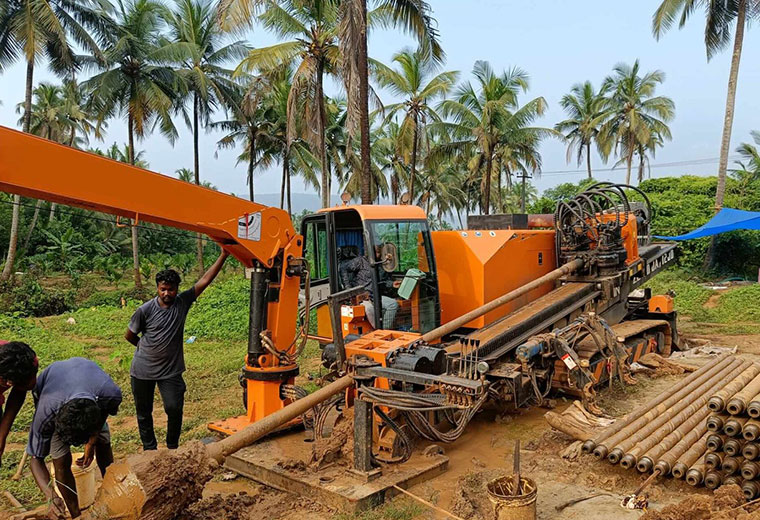
A 500-foot crossing and a rack of 10-foot HDD drill rods sound like a 50-rod job. Before ordering, check what each number measures. The crossing length on a site plan can be the horizontal distance between entry and exit. The rods follow the curved bore path, and the first length of pipe may enter the ground several feet ahead of the rig. Those differences can change the count even before you set aside a spare.
How many drill rods do you need for a directional bore?
Divide the length that standard rods must span by the working length of one assembled rod, then round up to the next whole rod. Keep the spare allowance on a separate line. If the measured span is 503 feet and each rod adds 10 feet to the assembled string, 50 rods cover 500 feet. You need 51 working rods. The extra seven feet of capacity in the last rod does not give the crew a spare rod.
Start at the rig, then trace the planned bore
Use the approved bore profile to find the distance along the centerline. A road width, a map measurement and a length of conduit on a delivery ticket answer different questions. A plan can also show stationing measured horizontally. Ask the designer what the reported length represents before copying it into the rod tally.
Next, mark the two ends of your measurement. Does it start at the ground entry point or at the rig? Does it end at the pilot head or at a rod connection behind it? Sketching those points helps the superintendent and the buyer agree on the same span. Account once for the rig setback and for any starter rod or head assembly included in the measurement. Use the actual setup dimensions. A starter assembly should only earn a length credit for the part of the measured span it actually occupies.
Example. Suppose a planned path from entry to exit measures 510 feet. In the planned end position, the string also spans 12 feet from the rig reference point to entry. The front assembly accounts for 4 feet of that combined length. Standard rods must cover 510 + 12 − 4 = 518 feet. At 10 working feet per rod, that requires 52 rods. These figures describe an example setup. Use the crew’s reference points and approved profile on a live job.
Which rod length belongs in the calculation?
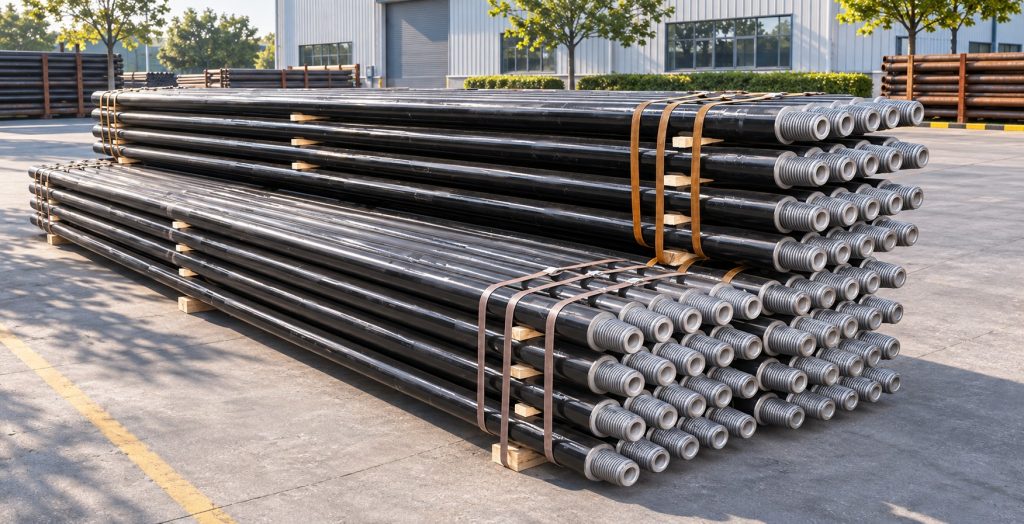
Look for working length, effective length or the length added when two connections are fully made up. A loose rod measured from the end of its pin to the back of its box can give a different number. On a short shot the error might disappear when you round up. Over dozens of joints it can leave the rack short. Ask the supplier to identify the reference faces on the drawing if the catalogue lists only “length.”
Keep all measurements in one unit until the count is complete. A 3-metre rod and a 10-foot rod are close enough to confuse on a packing list. Fifty 3-metre rods contribute 150 metres. Fifty 10-foot rods contribute 152.4 metres. Carry the unrounded length through the calculation, then round the final rod count up.
Drill rod count table
Each row assumes a uniform string of compatible rods. The first column already includes any setup adjustments. The spare quantities are examples chosen for arithmetic and carry no manufacturer recommendation.
| Span for standard rods | Working length | Working rods | Example spares | Dispatch total |
|---|---|---|---|---|
| 300 ft | 10 ft | 30 | 2 | 32 |
| 503 ft | 10 ft | 51 | 2 | 53 |
| 518 ft | 10 ft | 52 | 3 | 55 |
| 155 m | 3 m | 52 | 3 | 55 |
Turn the working count into a dispatch list
For the 518-foot example, suppose the crew chooses three compatible spare rods. Dispatch now needs 55. If the yard has 48 serviceable rods of the correct part number, the shortfall is seven. A rack holding another eight rods from a different rig should stay on its own inventory line until someone verifies the part numbers and connections. A count of steel in the yard can look adequate while the usable string is still short.
Set the spare allowance with the superintendent. A nearby yard with matching stock presents a different resupply problem from a remote crossing with a fixed delivery window. Record which rods passed the crew’s inspection and which ones are set aside for evaluation. Count the ready rods again after loading. When the crew divides the shipment between the rig magazine and a support truck, give the foreman both subtotals.
What should a request for drill pipe include?
Send the rig make and exact model, current pipe part number, thread designation, working length and quantity required. Identify starter rods, adapters and other tooling separately. A quote for “seven 10-foot pipes” leaves the supplier guessing which connection must mate with the existing string. Richdrill’s HDD drill pipe catalogue groups pipe by equipment family. For a tooling cross-check, the Ditch Witch HDD Advisor starts with the drill model and pipe selection.
Ask the supplier to repeat the working length and connection designation on the quotation. At receiving, compare the delivered markings with that line item before combining the new rods with existing stock. Keep a copy of the confirmed dimensions with the tally. It gives the next shift enough information to recalculate the count if the rig position changes.
Does a second bore double the order?
It depends on when the rods are available again. For two sequential bores using the same compatible string, plan around the greatest simultaneous demand and allow time for recovery and inspection. For two rigs working at the same time, build a separate tally for each rig and add their dispatch requirements. Counting the same spare rack on both sheets leaves one crew without the reserve it expected.
The final dispatch note can fit on one line: “518 ft of standard string, 10 ft working length, 52 working rods plus 3 spares, 48 confirmed on hand, 7 to source.” That line gives purchasing a quantity, gives the crew a count to check and preserves the assumptions behind both.