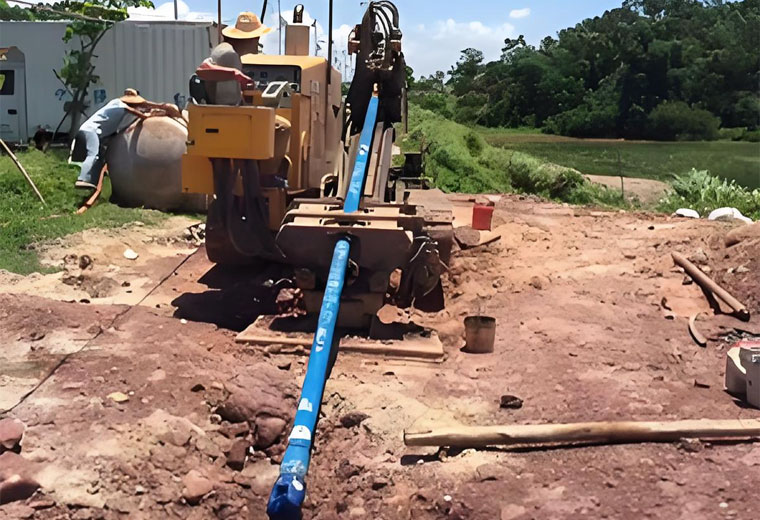
Hey, it’s me. Your drill rod guy. I’ve been selling and supporting HDD drill rods for five years now and I’ve had a lot of conversations that start with, “Man, these rods looked fine.” And far too many that end with, “So how much is fishing job going to cost?”
I ain’t no sleuth. I am not an attorney. I’m the one who gets the 6 a.m. photo of a broken pin and text, “Dude, what happened?”
I want to tell you about the moment that changed my perception of “cheap” rods.
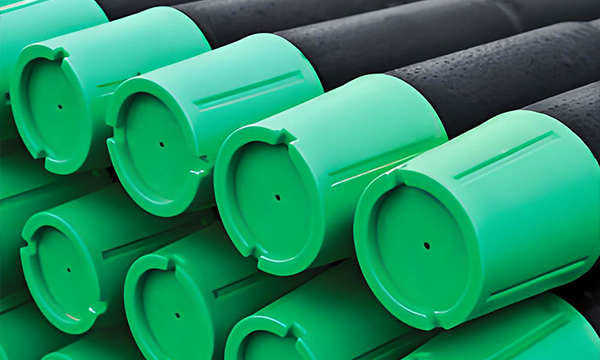
A few years ago, a contractor, let’s call him Dave, bought a set of rods off the internet. Correct color. Logo right. Right thread guards. He saved about 30-35%. He was juiced up. Two weeks later, he’s 180 feet under a highway and the pin snaps. He fishes the next two days, loses a reamer, eats the schedule. He sent me the failed rod and I put it on the bench. From arm’s length the thread looked all right.
Then I ran the right thread gage. It trembled. I cut the pin section and measured the hardness. It felt soft. Way out of spec. It was my “oh crap” moment. Fake rods are not always obviously fake. “Not down where you can’t see ’em until they’re downhole.”
So here is what I’ve learned. If you are buying HDD drill rods, especially from a new supplier, do these checks before they go in the ground.
The price is too good to be true.
I know, no one wants to hear “buy from an authorized dealer”. That sounds like a sales pitch. But I have seen the invoice on a fishing job. This isn’t a sales pitch, it’s math. If a pallet of rods is 30–40% cheaper than everyone else, why ask. Sometimes it’s a clearance sale. Sometimes it’s a con. Sometimes a phony with good paint.
Traceability and markings.
Real rods have heat numbers, batch codes, serial numbers or at least something the manufacturer can trace. Counterfeits often have shallow stamps, incorrect fonts, misspelled brand names, or a QR code that leads nowhere. If the paperwork is generic and the heat number is not matching the mill cert, stop.
The place to hide threads is fakes.
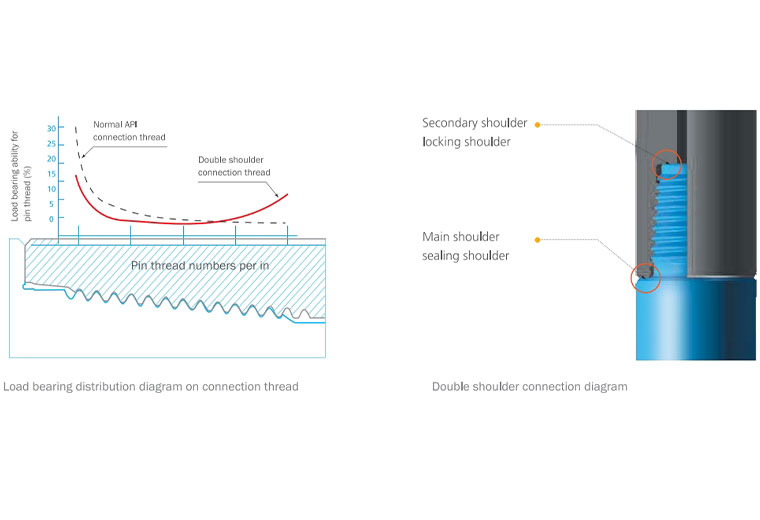
This is the big one. A counterfeit can replicate the color and the logo. Copying the thread geometry is much harder. Check the pin and box for the connection with the correct thread gages. Look for chatter marks, burrs, rough flanks, inconsistent lead, or a thread that just feels “gritty”. “If the gage don’t sit right, don’t run it. Threads are not a place for “close enough.”
Wall thickness and weight.
Counterfeiters can save some money on steel. Weigh the rod and compare to the catalog spec. Measure the O.D. If you have one, use an ultrasonic thickness gage. The thinner the wall, the less strength and the sooner it will fail under pullback or torque.
Hardness and heat treatment
That is the unseen killer. A rod can look great and still be soft. Or too fragile, too hard. Check hardness of pin and box with portable hardness tester. Compare to the manufacturer specs. If the pin is soft it will gall, stretch and wash out. If it is too hard it will crack . Either way, you’re not going to like where it goes.
Quality of welds and joints.
In a welded body construction, check the weld area. The real manufacturers do controlled friction welding, then check it. Counterfeits can bypass the NDT. Check for uneven flash, undercut or discoloration that signals a bad weld. If available, ask for ultrasonic or magnetic particle inspection reports.
Correctness.
Place the bar in V-blocks or roll it on a flat concrete surface. A bent rod is a crack waiting to fatigue. Counterfeits are often made from worn tooling or poor handling. If it wobbles now, it will wobble worse down hole.
Records.
Ask for mill certs, heat treat records, NDT reports and a warranty. Real ones have ’em. Counterfeits usually have a PDF that looks like it was thrown together. If they can’t tell you the steel grade, the heat treat spec and the torque spec, that’s your answer.
Compare with a good rod.
Leave one genuine rod to compare. Stack it up next to the new ones. Look at the thread, the markings, the weight, the color of the thread compound, the protectors. Sometimes the gage doesn’t pick it up and your eyes do.
Grill the supplier.
Who makes the steel? What is the heat treat? What is the thread pitch you use? Can I see the NDT reports? What kind of warranty? If they get defensive or vague, walk away. There are too many good rods out there to risk a mystery pallet.
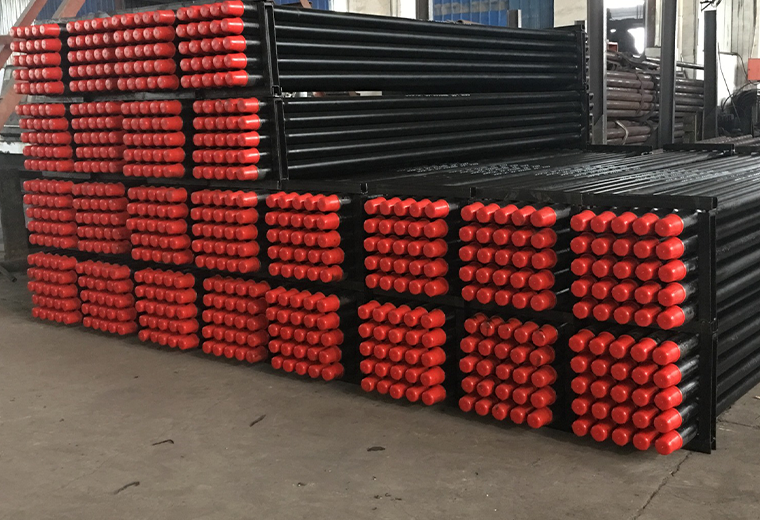
Here’s my 10 minute check before running: Weigh one rod, measure the OD and wall, run thread gages, check hardness, roll for straightness, borescope the ID, check markings against the paperwork and compare it to a known good rod. It’s not sexy. But it’s a lot cheaper than a fishing-job.
What is failure? Thread washouts. Swelling of the Box. Pin, stretch . Cracks at the base of the thread. Heat discoloration. If you see any of that on new rods, stop it. Don’t “run them into the ground.” They will do.
What I really realized was this: fake HDD drill rods are not a logo problem. They are metallurgical and geometrical problems. The logo does not drill in. The steel do the tread.
Yeah, I work at a drill rod factory. I’m biased. But I’d rather you buy real rods from anyone than run counterfeits and call me from a jobsite at 2 a.m. If you have a pallet that is not right, just take a photo of the thread and markings and send it to me. I’ll tell you what I see. No pitch. Another pair of eyes.
By Frank
HDD Engineering Sales
RICHDRILL EQUIPMENT CO.,LTD
Share :
Recently Released
- How to Detect Fake HDD Drill Rods Before They Fail Downhole
- How Stabilizers and Reamers Add Stress to Your HDD Drill Rods (And What You Can Do)
- When to Scrap Your HDD Drill Rods: OD Wear, Wall Thinning and Ovality Limits
- The #1 Mistake New HDD Operators Make With Drill Pipe (And How To Fix It Right Now)
- HDD Projects for River Crossings: How to Select Drill Rods That Won’t Buckle