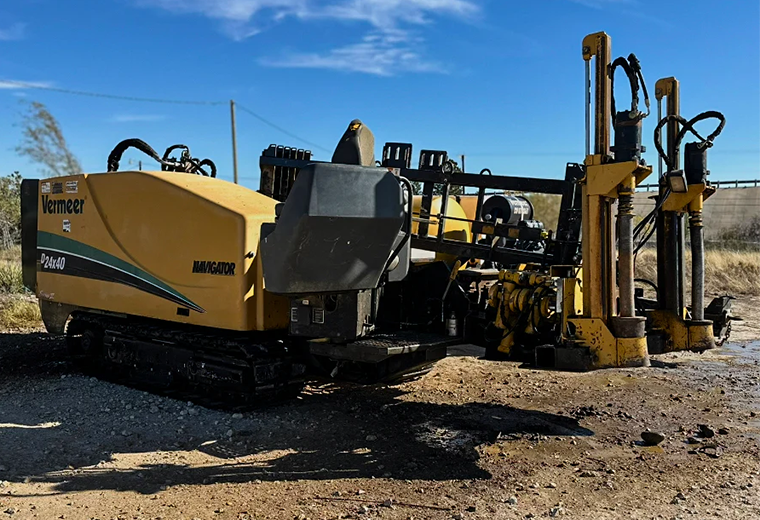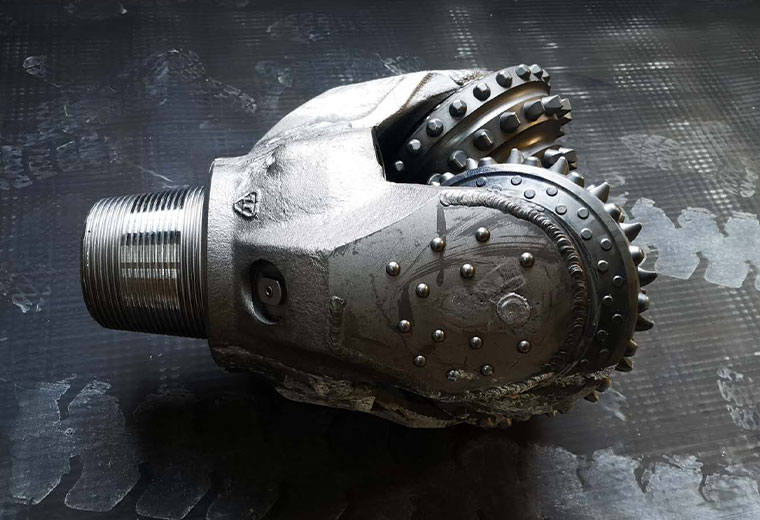
Now I want to tell you something funny. I’ve been in this industry for five years now, and I still remember the first time a customer called me in panic because his drill pipe broke halfway through a river crossing.
He hadn’t asked for a sales spiel. He was asking me what the hell just happened.
And frankly? From then on my perspective on drill rods changed completely.
The Day I Discovered River Crossings Are A Whole Different Animal
This is what drilling under a river is like. You’re not just working with dirt. You’ve got water pressure. You’ve got unpredictable geology. You’ve got the fact that if something goes wrong you can’t just go dig it up and fix it. Once that pilot hole begins to curve under the river, there is no way back.
That first call I received? That was supposed to be simple. A river crossing, maybe 500m, nothing crazy. But the geology underneath that river was a nightmare – cobbles, hard strata, the lot. They were using standard grade rods, the sort that are fine for 90% of jobs. But the 90% is not about river crossings. These are the 10% that will eat your lunch if you don’t watch it.
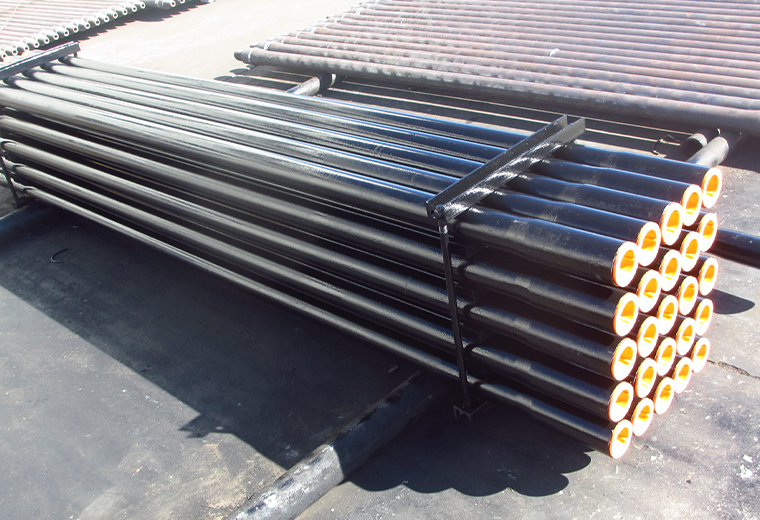
I’ve seen crews trying to save money on drill rods for river jobs. “It’s boring.” they say. “Is there a difference?
And then they are three weeks in a hole pulling out a broken string with the client breathing down their necks.
One guy told me, “I’d rather eat my hard hat than do another river crossing with the wrong rods.”
That stays with me.
So What’s Really Going On Down There?
Imagine a drill rod across a river. It is bent, twisted, vibrated, pulled and pushed in every direction. That rod is bending every time it turns a corner. It is getting a beating every time you reverse rotation. Those little stresses add up over hundreds of meters and thousands of revolutions.
And the twist – fatigue can occur at stress levels far below the rated stress of the rod. I remember a project on the Weihe River – a big pipeline for the Second West-East Gas Pipeline. The drill pipe just went out on the 6th ream run. Just like that. The investigation was a fatigue failure. They calculated the alternating stress at the junction of the pipe and the reamer. And lo and behold it was a time bomb waiting to detonate.
Statistics show that approximately 80% of drill pipe accidents in HDD are caused by fatigue, mainly in the form of joint thread and welding line fracture. That’s a number you don’t want to ignore when you’re 500 meters under a river.
The “Aha” Moment About Steel Grade
So, you are convinced that better rods are needed. But what does “high-strength” really mean in this context?
You will hear a lot about two big names S-135 and V-150.
S-135 is the workhorse – this is what most people think of when they say “high strength” for directional drilling. It is rated at 135,000 psi tensile strength. That’s perfectly fine for a lot of jobs. River crossings though? That’s where things get interesting.
The V-150 is a step up. It is alloyed with other elements such as molybdenum , nickel and vanadium . And some manufacturers have even come up with V145, a coded version of S135 that gives an extra edge in flexibility without sacrificing toughness. That flexibility is key when your string of rods is flexing and rebounding thousands of times along a long bore.
I will never forget Jiangyin Yangtze River Project. They drilled 3,300 meters. That’s just nuts for HDD. And they didn’t use rods made in the factory. At the pilot hole stage they used a special high strength Ø193.7 mm drill pipe S-135, which is not even in the standard API specs. Then they went to Ø168.3 mm V-150 pipe for reaming because the torque was brutal.
They had to design a solution for each stage. That’s what river crossings are for.
The Bending Radius Thing They Don’t Tell You About
Industry rule of thumb: ASTM F1962 says the radius of curvature for a steel pipe or rod should be no less than 100 times the diameter in inches. For a 2 inch drill rod, that is 200 feet minimum.
But that’s just a rule of thumb. River crossings can present all sorts of surprises. The curvature, and thus the bending stresses you are dealing with, is set by the allowed bending radius of the steel drill rod. Go too far and you’re asking for trouble.
What I’m Telling My Clients Now
That first panicked call changed the way I talk to customers about river crossings. This is what I tell them:
Don’t skimp on the rods. I know it’s tempting. “It’ll probably be fine,” you think, “small budget, client breathing down your neck. Probably not good enough when you’re under a river.”
Match the stage to the rod. Pilot hole, reaming, pullback – all of these place different demands on your drill string. When the torque gets brutal what works for a pilot hole may not work for a reamer.
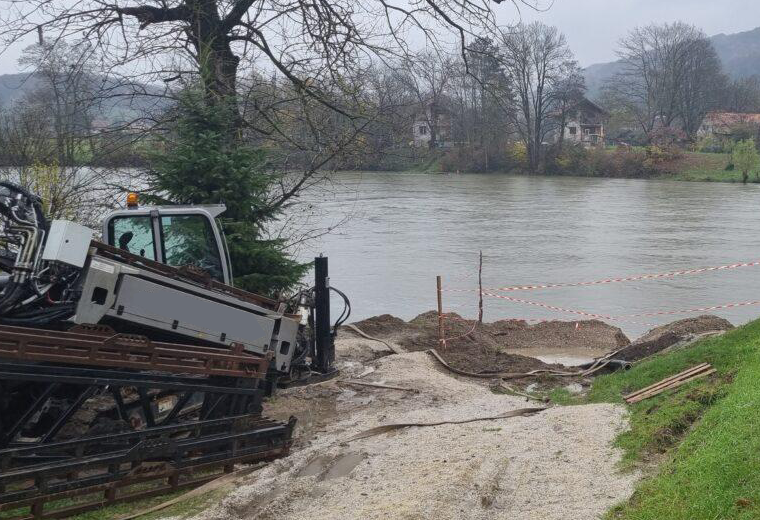
Imagine tiredness from day one. That rod will bend thousands of times. Make sure you are using something that is built to handle that kind of repetitive stress.
Think, too, about the thread design. It’s not just steel. Thread profile. Connection reliability under load. How the rod handles torque. All of it matters. Some rods are three-piece welded construction where the tube body is inertia-welded to the tool joint – those welds create a potential failure point that is exacerbated under fatigue. It’s a one-piece forged construction so it handles the load more efficiently and gets rid of any risk of weld-related failure.
Bottom line
“Listen, I’m not here to frighten you. I’m here to help you avoid the kind of call that customer called me with five years ago. River crossings are the 10% of jobs that require more than standard equipment. These are the projects where the stakes are higher, the consequences of failure are greater, and the right drill rods can mean the difference between a successful project and a nightmare.
Choose your poison. Your sanity—and your client’s patience—will thank you.
By Frank
HDD Engineering Sales
RICHDRILL EQUIPMENT CO.,LTD
Share :
Recently Released
- How to Detect Fake HDD Drill Rods Before They Fail Downhole
- How Stabilizers and Reamers Add Stress to Your HDD Drill Rods (And What You Can Do)
- When to Scrap Your HDD Drill Rods: OD Wear, Wall Thinning and Ovality Limits
- The #1 Mistake New HDD Operators Make With Drill Pipe (And How To Fix It Right Now)
- HDD Projects for River Crossings: How to Select Drill Rods That Won’t Buckle